The Significance of CBAM
CBAM Implementation Timeline
Which Businesses Are Affected by CBAM?
What Must Be Reported During the Transitional Period
How to Calculate Carbon Emissions for CBAM Reporting
Guide to GHG Inventory Under CBAM
1. Identify the products affected
2. Collect emissions data
3. Select the calculation method
4. Prepare the GHG inventory report
5. Integrate automation technology
Benefits of Early CBAM Compliance
Steps Businesses Should Take Right Now
Conclusion
CBAM Reporting Guide - EcoCheck
The Significance of CBAM
The Carbon Border Adjustment Mechanism (CBAM) is a regulatory framework designed to address carbon leakage and ensure a level playing field for businesses in the global market. At its core, CBAM aims to create a transparent and fair system by applying a carbon price to imports that reflects the carbon content of goods entering the market.
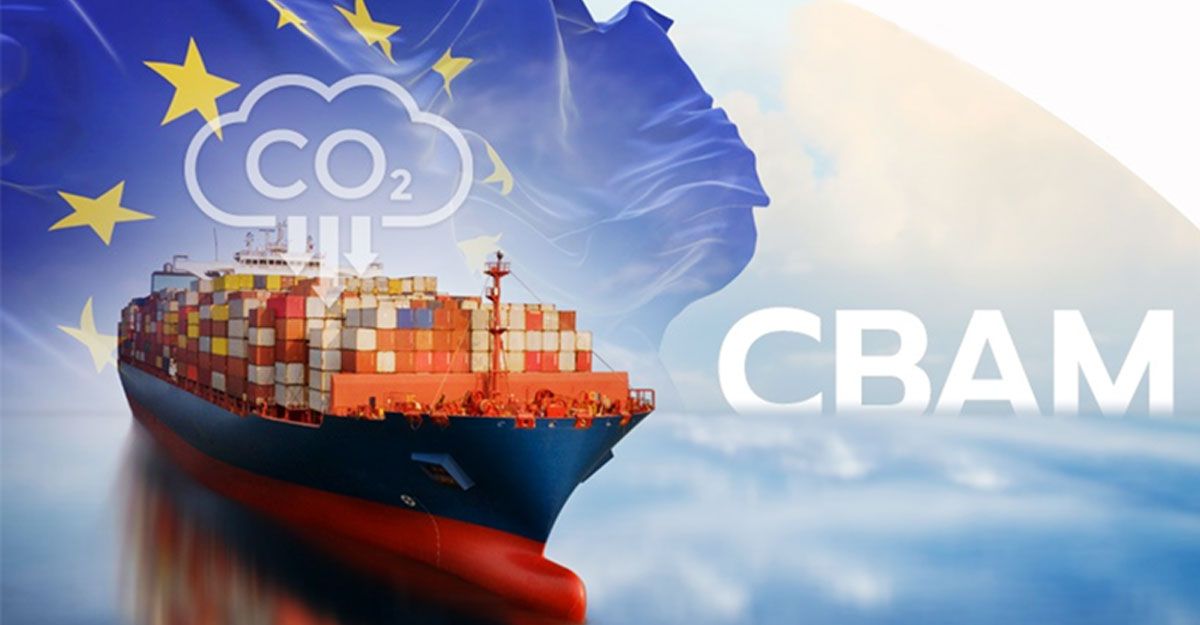
The Carbon Border Adjustment Mechanism (CBAM) prevents carbon leakage and ensures fair global competition.
CBAM has several major impacts, including the potential for higher prices on imported goods, the need for businesses to assess and reduce their carbon emissions, and the possibility of trade disputes as well as implementation challenges. It is essential that businesses assess their current operations and make the necessary adjustments to comply with CBAM regulations.
CBAM Implementation Timeline
- 01/10/2023 – 31/12/2025: Transitional period. During this period, importing businesses are subject to reporting obligations under Articles 33, 34 and 35 of Regulation (EU) 2023/956.
- From 01/01/2025: Importing businesses must comply with registration and declaration obligations. As of 01/01/2026, only registered declarants will be permitted to import CBAM goods. The customs authorities of EU member states are obligated to monitor the movement of goods and to refuse the import of CBAM goods from unregistered declarants.
- 01/01/2026: The transitional period ends, and businesses will be obligated to report their carbon emissions and pay the applicable carbon 'tax'.
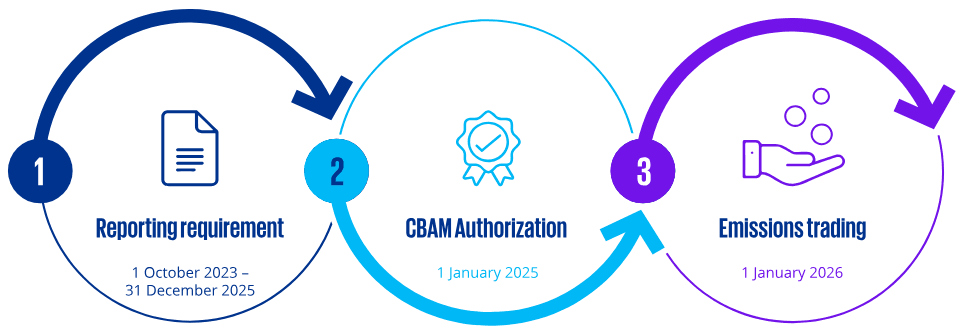
CBAM implementation timeline
Which Businesses Are Affected by CBAM?
All businesses that import products, and those that manufacture these imported products outside the EU, are affected by CBAM — particularly businesses in the construction, machinery, automotive manufacturing, rail, equipment, chemical, and agriculture sectors.
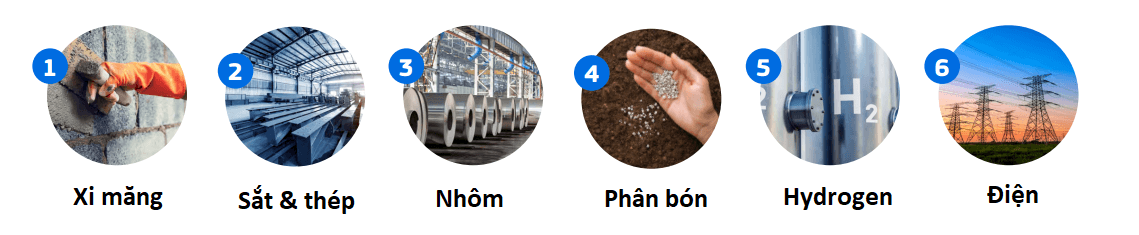
CBAM covers approximately 500 products across the following product groups, which are considered to be at high risk of carbon leakage:
- Iron and steel
- Aluminium
- Cement
- Fertilizers
- Electricity
- Hydrogen
What Must Be Reported During the Transitional Period
During the transitional period (01/10/2023 – 31/12/2025), businesses are obligated to report the greenhouse gas emissions associated with goods imported into the EU. A CBAM report must include:
- The total volume of goods imported into the EU, classified by HS code.
- Direct greenhouse gas emissions (Scope 1) associated with the production process of the imported goods.
- Indirect emissions (Scope 2) from electricity consumed during production, where reportable.
- Any carbon price already paid in the country of production, if applicable.
Businesses must submit quarterly reports through the European Commission's platform. The first report had to be submitted by 31/01/2024.
How to Calculate Carbon Emissions for CBAM Reporting
Businesses can use three methods to calculate emissions for CBAM reporting:
- The EU default method: Based on default emission factors provided by the EU.
- The actual measurement method: Calculations based on actual data from the production process, following IPCC or GHG Protocol standards.
- The hybrid method: Applying actual data where available and using EU default factors for the remainder.
Choosing the appropriate method helps businesses optimize costs and ensure compliance with CBAM regulations.
Guide to GHG Inventory Under CBAM
1. Identify the products affected
Businesses need to check whether their goods fall within the CBAM scope. Currently, the mechanism targets 6 high-emission sectors:
- Steel: Significant emissions from steelmaking processes that use coke.
- Aluminium: High electricity consumption from coal-fired power.
- Cement: Cement clinker production emits substantial CO₂.
- Electricity: Particularly coal power, which has high carbon intensity.
- Fertilizers: Production of ammonia and urea emits CO₂ and N₂O.
- Hydrogen: If not produced using green technology, it can emit CO₂.
2. Collect emissions data
Data must be collected according to two main scopes:
- Scope 1 (Direct emissions): From production and the use of fossil fuels such as coal, oil, and natural gas.
- Scope 2 (Indirect emissions): From electricity consumption, particularly coal-fired power (GHG Protocol, 2023).
Data must be collected in accordance with international standards to ensure transparency and recognition by the EU.
3. Select the calculation method
Once the data is available, businesses can calculate emissions using three methods:
- EU standard: Using default emission factors provided by the EU.
- Actual measurement: Applying data from the production process, following IPCC or GHG Protocol.
- Hybrid method: Actual data combined with EU default factors
4. Prepare the GHG inventory report
A CBAM report should include:
- Detailed production processes.
- Emissions by stage.
- Records and documentation to substantiate the data.
- Emission reduction measures already implemented.
The report must be updated periodically to ensure compliance.
5. Integrate automation technology
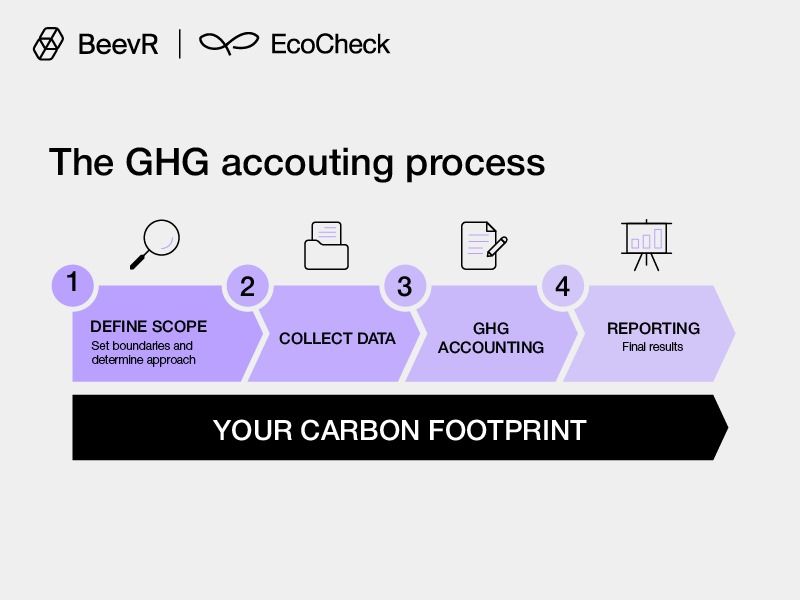
Manual inventory is time-consuming, error-prone, and difficult to control. Businesses can optimize the process with EcoCheck software:
- Automatically calculate emissions according to international standards.
- Export reports in the correct CBAM format.
- Secure data and reduce inventory costs.
- Continuously update with the latest EU regulations.
>>> Read more: EcoCheck GHG Inventory Services
Benefits of Early CBAM Compliance
Complying with CBAM not only helps businesses avoid legal risks but also delivers many long-term benefits:
- Maintaining access to the EU market: Ensuring that goods are not obstructed when exported to the EU.
- Optimizing costs and processes: Businesses can control their emissions and optimize production processes to reduce carbon costs.
- Enhancing competitiveness: Businesses that proactively comply with CBAM will have an advantage in the global supply chain.
Steps Businesses Should Take Right Now
To meet CBAM requirements and ensure that exports to the EU are not disrupted, businesses need to take the following steps:
- Identify products affected by CBAM: Check whether the products exported to the EU fall within the group of goods subject to CBAM.
- Collect and prepare emissions data: Assess emissions in the production process according to international measurement standards such as IPCC or GHG Protocol.
- Select the appropriate calculation method: Apply the actual measurement method or use EU default emission factors where necessary.
- Establish a periodic reporting system: Ensure there is an internal process to collect and report CBAM data on time.
- Stay updated on new regulations: Closely monitor changes from the European Commission to promptly adjust the compliance strategy.
>>> Read more: Common GHG Inventory Methods and Standards
Conclusion
CBAM is not only a challenge but also an opportunity for businesses to enhance their competitiveness and move toward sustainable production. Preparing early helps businesses avoid legal risks, optimize costs, and strengthen their position in the global supply chain.
Start today to ensure your business is always ready for changes in the EU's climate policy!
>>> Read more: CBAM Reporting Services
CONTACT INFORMATION:
BeevR Technologies Co., Ltd
Address:
- Hanoi Office: 125 Hoang Ngan, Trung Kinh, Cau Giay, Hanoi
- Hotline: 037.6869.366
- Email: [email protected]
- Website: https://ecocheck.ai/