Introduction
The importance of the Law on Environmental Protection (LEP) in the context of climate change
Requirements and regulations related to GHG inventory in the LEP
Overview of the Law on Environmental Protection
History and development of the Law on Environmental Protection in Vietnam
Highlights of the Law on Environmental Protection 2020
Solutions for Applying Technology to Comply with the Law on Environmental Protection
How GHG inventory software helps businesses comply with regulations more easily
Key features of the EcoCheck platform that help businesses measure, report, and optimize emissions
Conclusion
Law on Environmental Protection and Effective Emission Management
Introduction
The importance of the Law on Environmental Protection (LEP) in the context of climate change
For business owners, the Law on Environmental Protection (LEP) is not only a legal framework to comply with, but also a key factor that directly affects the sustainability and growth of a business in the context of climate change. Understanding and complying with the LEP helps businesses minimize legal risks, avoid significant penalties, and build a green brand image, creating a competitive advantage in the market.
Moreover, investing in effective emission management solutions, as encouraged by the LEP, not only helps businesses save operating costs but also opens up new business opportunities in the fields of green technology and sustainable development.
Requirements and regulations related to GHG inventory in the LEP
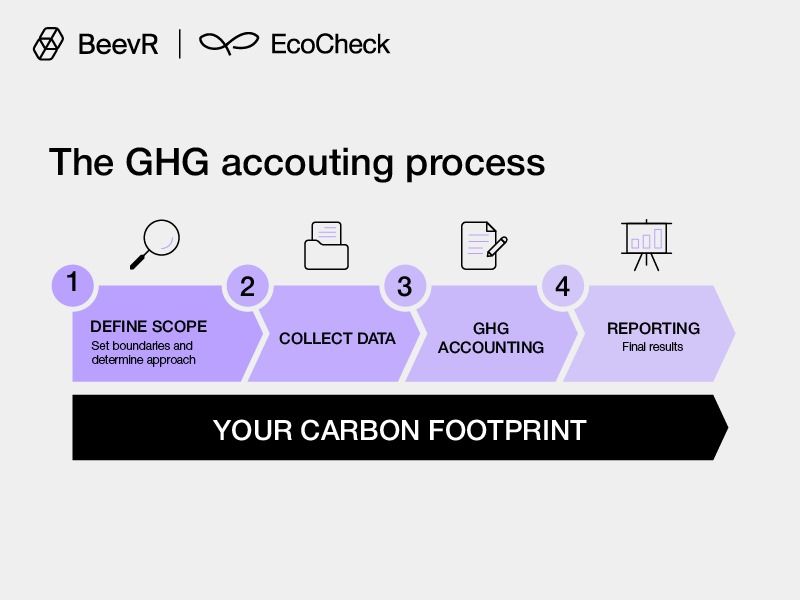
The Law on Environmental Protection (LEP) sets out specific requirements and regulations on GHG inventory, aiming to help businesses accurately assess their emission levels and implement effective mitigation measures. Accordingly, businesses on the list of greenhouse gas emitting facilities must carry out periodic GHG inventories and report the results to state management agencies. The inventory process includes identifying emission sources, measuring emission levels, and preparing reports in accordance with regulations. Complying with these requirements not only helps businesses meet legal regulations, but also serves as a basis for building a sustainable development strategy, minimizing negative impacts on the environment, and enhancing brand reputation in the eyes of customers and partners.
Overview of the Law on Environmental Protection
History and development of the Law on Environmental Protection in Vietnam
The Law on Environmental Protection (LEP) in Vietnam has undergone significant development, reflecting the change in the country's awareness and priorities regarding environmental issues. Since the first Law on Environmental Protection was enacted in 1993, Vietnam has continuously improved and updated this legal system to align with the actual situation and international commitments. The amendments and supplements in 2005, 2014, and especially the Law on Environmental Protection 2020 have marked important steps forward in strengthening environmental management, controlling pollution, and promoting sustainable development.
Highlights of the Law on Environmental Protection 2020
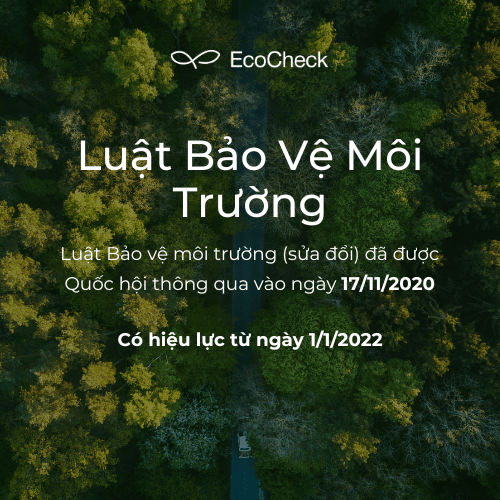
The Law on Environmental Protection (amended) was passed by the National Assembly on November 17, 2020, comprising 16 chapters and 171 articles. This law took effect on January 1, 2022, except for the content on preliminary environmental impact assessment, which took effect on February 1, 2021.
The Law on Environmental Protection 2020, with stricter regulations on GHG inventory and waste management, demonstrates Vietnam's strong commitment to responding to climate change and protecting the environment for future generations.
Notable highlights of the LEP 2020:
Local communities become a stakeholder: For the first time, local communities are recognized as a stakeholder in environmental protection efforts. This reflects the attention paid to the rights and role of citizens in protecting their living environment.
Classification of investment projects by environmental criteria: The law introduces clear environmental criteria to classify investment projects, making environmental impact assessment more accurate and effective.
Strengthening water and air environmental quality management: The law introduces specific regulations on air pollution management and control, especially in urban and industrial areas. Furthermore, the law also stipulates matters concerning the management and protection of the environment of surface water, groundwater, and seawater; as well as regulations on water environment protection in production, business, and service activities.
Promoting waste segregation at source: The law encourages and clearly stipulates the segregation of domestic solid waste at source, aiming to reduce the amount of waste sent to landfills and enhance recycling.
Soil environmental quality management: The law clearly stipulates the investigation, assessment, classification, and public disclosure of information on soil environmental quality, while also introducing measures for treating, improving, and restoring the soil environment.
Management authority: For the first time, the regime on state management authority is based on the principle of integrated, unified management, with each task assigned to a single lead agency; and thorough decentralization to local authorities.
Environmental auditing: For the first time, a specific regime on environmental auditing is established to strengthen the capacity and effectiveness of businesses' environmental management. The purpose of this activity is to enhance businesses' environmental management capacity, helping them identify gaps in environmental management and find solutions to adjust their environmental management activities more effectively.
The law has also added a provision for the State Audit Office to conduct audits in the environmental field in accordance with the Law on State Audit and relevant laws.
Provisions on climate change response: The Law on Environmental Protection 2020 has added provisions on adapting to climate change, mitigating greenhouse gas emissions, and protecting the ozone layer, which define the content and responsibilities of the Ministry of Natural Resources and Environment, relevant Ministries and sectors, and local authorities regarding climate change adaptation and greenhouse gas emission mitigation.
Completing the legal framework for protecting natural heritage: The Law on Environmental Protection 2020 has introduced provisions on the criteria for establishing natural heritage based on international criteria and the practical conditions of Vietnam today. At the same time, it stipulates the investigation, assessment, management, and environmental protection of natural heritage to protect and promote the sustainable value of natural heritage in our country.
Developing sustainable economic growth models: The current mainstream economic development trend among countries worldwide, especially developing countries, is sustainable economic development by promoting green economy, circular economy, and low-carbon economy models, and investing in natural capital.
These models focus on investing in natural capital and in the production, consumption, import-export, distribution, and trading of products, goods, and services. The goal is to optimize the use of materials, resources, energy, and waste in an environmentally friendly manner.
Solutions for Applying Technology to Comply with the Law on Environmental Protection
How GHG inventory software helps businesses comply with regulations more easily
GHG inventory software is a powerful tool that helps businesses simplify the process of complying with GHG inventory regulations in the Law on Environmental Protection (LEP). Instead of performing complex manual calculations that are prone to errors, the software automates the collection, processing, and analysis of emission data from various sources.
This not only helps businesses save time and resources, but also ensures the accuracy and transparency of inventory reports. Moreover, the software is often designed to comply with international standards and regulations, helping businesses easily meet legal requirements and enhance their reputation in the eyes of partners and customers.
Key features of the EcoCheck platform that help businesses measure, report, and optimize emissions
Compared to traditional methods, digitizing the GHG inventory process brings many outstanding benefits. The EcoCheck platform is a comprehensive tool that helps businesses measure, report, and optimize emissions effectively. With accurate data analysis capabilities, EcoCheck ensures that all emission information is processed reliably.
The scientific data management feature helps businesses organize and store data systematically, making it easy to retrieve and analyze. In particular, the EcoCheck Copilot artificial intelligence virtual assistant provides intelligent support, helping businesses answer questions and offer emission optimization recommendations. Finally, EcoCheck provides in-depth reports in multiple formats in full compliance with prescribed standards such as Decree 06/2022/ND-CP and ISO 14064-1:2018, helping businesses understand their emission situation and make strategic decisions to minimize environmental impact.
Conclusion
In the context of increasingly complex climate change, complying with the Law on Environmental Protection (LEP) is not only a legal responsibility but also a key factor in ensuring the sustainable development of a business. Applying advanced technology solutions such as the EcoCheck platform helps simplify the emission inventory process, optimize environmental management, and enhance brand reputation. By proactively implementing emission reduction measures and complying with the LEP, businesses not only contribute to protecting the environment but also create a competitive advantage and open up opportunities for sustainable development in the future.
We cordially invite businesses to experience the EcoCheck platform. With its user-friendly interface and ability to provide in-depth reports, EcoCheck will help businesses save time, minimize errors, and optimize the GHG inventory process.
Contact EcoCheck now to be ready for your greenhouse gas inventory and emission reduction journey in an easy, accurate, and effective way.