Introduction
What is a Carbon Tax?
Basic definition of a carbon tax
Forms of applying a carbon tax
Main objectives of a carbon tax
Economic impacts of a carbon tax
Lessons from international experience
Conclusion
Carbon Tax: A Green Economy Solution for Sustainable Development
Introduction
Carbon taxes are increasingly recognized by governments and organizations worldwide as one of the key economic policy tools for shaping behavior and driving the green transition on the journey toward a sustainable future.
Not only regarded as an effective measure to reduce greenhouse gas emissions, a carbon tax also has the potential to create new economic opportunities by encouraging innovation and investment in clean technologies.
For Vietnam, a developing country heavily affected by climate change, researching and gaining a clear understanding of the carbon tax is extremely important in order to make appropriate policy decisions, ensuring sustainable development and effective international integration.
What is a Carbon Tax?
Basic definition of a carbon tax
A carbon tax is a tax applied explicitly based on the amount of carbon dioxide (CO₂) emissions or other equivalent greenhouse gases.
This mechanism can be implemented in various forms, including being applied upstream on importers or distributors of fossil fuels, treated as an indirect tax.
In addition, a carbon tax can also be applied directly at major emission points (point sources) or at the final consumption level (downstream).
Importantly, a carbon tax is calculated based on actual emissions, typically expressed in currency units per tonne of carbon dioxide equivalent (e.g., $/tCO₂e).
Forms of applying a carbon tax
Direct tax
A direct tax targets carbon emissions generated directly from specific activities. This form can be applied at large point sources of emissions, such as power plants and industrial facilities, or even at the final consumption level, for example by taxing emissions from means of transportation.
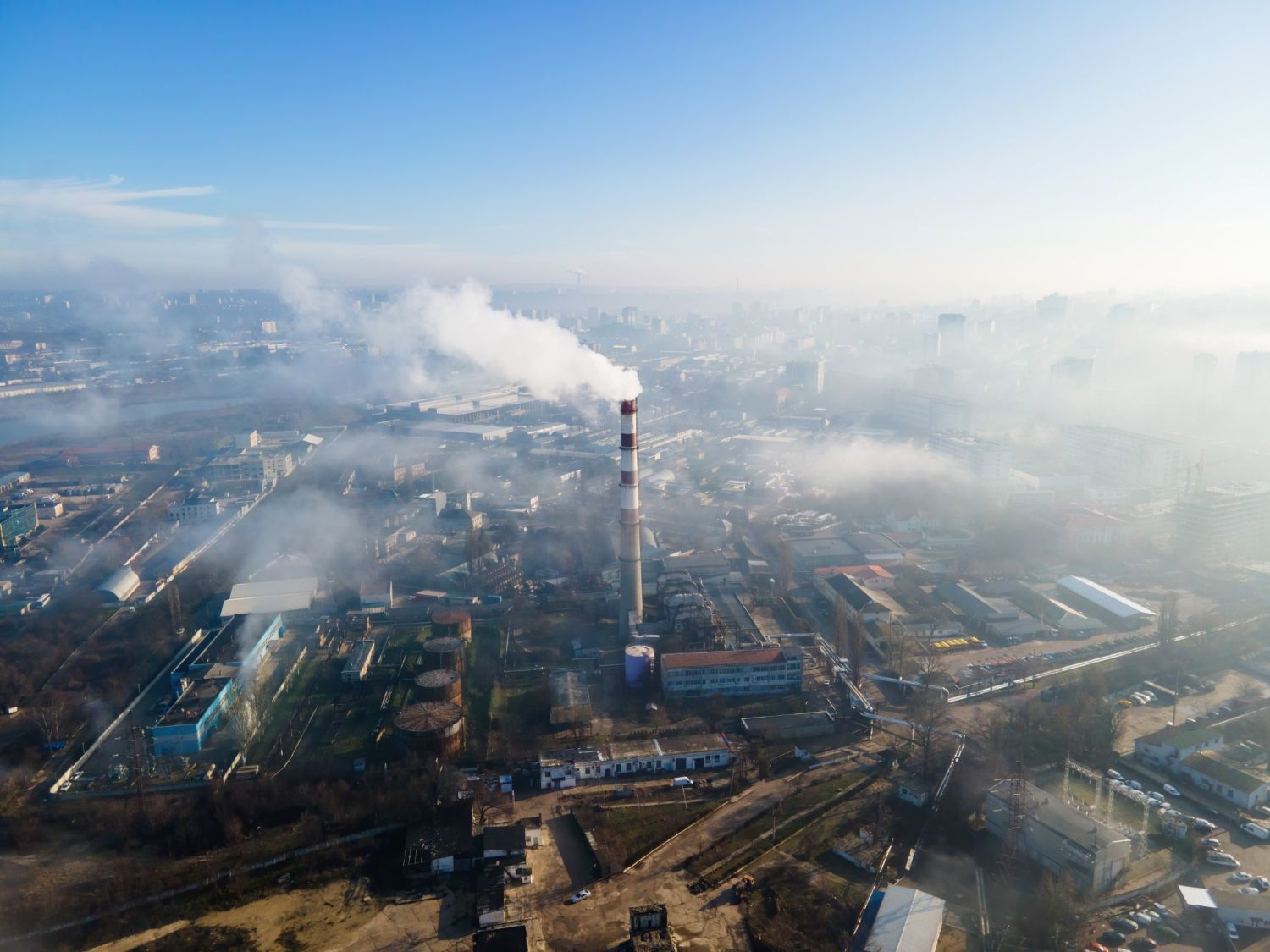
A direct tax usually requires a more complex emissions measurement and monitoring system to ensure accuracy in tax calculation. However, it provides greater transparency about the cost of pollution for taxpayers and can create a stronger incentive to reduce emissions at the source.
Indirect tax
In contrast to a direct tax, an indirect tax is usually implemented at the upstream stage of the energy supply chain. This means the tax is levied on importers or distributors of fossil fuels such as coal, oil, and natural gas.

Instead of directly taxing emissions from production or consumption activities, an indirect tax affects the cost of fuel, thereby encouraging businesses and consumers to switch to cleaner energy sources or adopt energy-saving measures. The advantage of this approach is that it is easy to manage and collect the tax at a small number of key points; however, its impact on prices can spread throughout the economy.
Main objectives of a carbon tax
The main objective of a carbon tax is to create a strong signal that reflects the true environmental cost of greenhouse gas emissions. By increasing the cost of carbon-polluting activities, this tax encourages businesses, organizations, and individuals to change their behavior toward reducing emissions.
Another important objective of a carbon tax is to support national and international efforts to mitigate climate change. By creating a cost for carbon emissions, this tax contributes to realizing the greenhouse gas emission reduction commitments that countries have made.
In addition, applying a carbon tax can generate significant revenue for the government, resources that can be reinvested in renewable energy projects, research and development of green technologies, or support for communities and industries affected by the transition to a low-carbon economy.
Another important aspect of a carbon tax is its potential to improve public health. Reducing greenhouse gas emissions, especially co-pollutants generated from burning fossil fuels, can lead to cleaner air and water. This directly reduces the incidence of respiratory and cardiovascular diseases and other health problems related to environmental pollution, bringing great benefits to quality of life and reducing the burden on the healthcare system.
Economic impacts of a carbon tax
Beyond its environmental and revenue-generating objectives, a carbon tax can also have significant impacts on the structure and dynamics of the economy.
Carbon tax policy has the potential to change the economic structure, reducing dependence on high-carbon-emitting industries and opening up development potential for lower-emission sectors, including services and green technology, thereby creating new jobs.
At the same time, a carbon tax can affect the competitive advantage of businesses and countries, especially for export industries with high emission intensity. This can encourage businesses to seek more carbon-efficient production solutions to maintain or enhance their competitiveness in the international market, while also reshaping global trade and investment flows toward greater sustainability.
Another aspect to consider is the impact of a carbon tax on the cost of living and the purchasing power of the population. Increasing the price of fuel and energy-intensive products can affect consumer spending, especially for low-income individuals.
To mitigate this impact, governments may consider support measures such as income tax reductions or targeted subsidies. In addition, a carbon tax can also affect the competitiveness of export industries, especially those with high energy costs. Therefore, the design of carbon tax policy needs to take these factors into account and may be accompanied by measures to support businesses in the transition to lower-carbon production processes, or through international agreements to ensure a level playing field.
Lessons from international experience
Although Vietnam currently does not have a formal carbon tax mechanism, it has been taking its first steps in the field of carbon pricing. This is reflected in the pilot carbon credit market starting in 2025 and the application of an environmental protection fee on fossil fuels.
To date, the carbon tax has become an increasingly common policy tool in global efforts to reduce greenhouse gas emissions. Currently, about 37 countries and regions around the world have implemented various forms of carbon tax, such as developed countries including the United Kingdom, France, Sweden, Norway, Finland, Japan, India, and Singapore.
The diversity in carbon tax approaches is clearly reflected in the fact that some countries focus on taxing fossil fuels, while others apply a direct tax on emissions from specific industries. This trend shows the growing recognition of the role of carbon pricing in encouraging environmentally friendly activities and driving the transition to a low-carbon economy.
An important factor drawn from the experience of other countries is striking a balance between achieving emission reduction targets and maintaining economic growth, while also addressing the social issues that arise. Many countries have applied mechanisms to reinvest carbon tax revenue in green economic sectors, support research and development of clean technologies, or reduce the tax burden on citizens and businesses. In addition, the implementation of a carbon tax is often carried out along a step-by-step roadmap, allowing industries and consumers time to adapt.
Governments also often combine a carbon tax with other supporting policies, such as subsidies for renewable energy or energy efficiency improvement programs, in order to minimize the negative impact on business competitiveness and ensure a just and sustainable transition.
Singapore, representing the Asian region, is a typical example of approaching a carbon tax in a cautious and strategic manner. This island nation implemented a carbon tax in 2019 with a relatively low initial rate, expected to increase gradually in the future.
Specifically, Singapore officially applied a carbon tax from January 1, 2019, becoming the first country in Southeast Asia to implement a carbon pricing mechanism. The initial rate was set at 5 Singapore dollars per tonne of carbon dioxide equivalent (S$5/tCO2e) and was maintained for the first 5 years, from 2019 to 2023, to give businesses time to adapt. In addition, Singapore announced plans to raise the carbon tax to 25 Singapore dollars/tonne CO2e in 2024, and continue to increase it to 45 Singapore dollars/tonne CO2e in 2026, with the goal of reaching 50-80 Singapore dollars/tonne CO2e by 2030. This tax increase roadmap demonstrates Singapore's strong commitment to achieving long-term climate goals and driving the transition to a low-carbon economy.
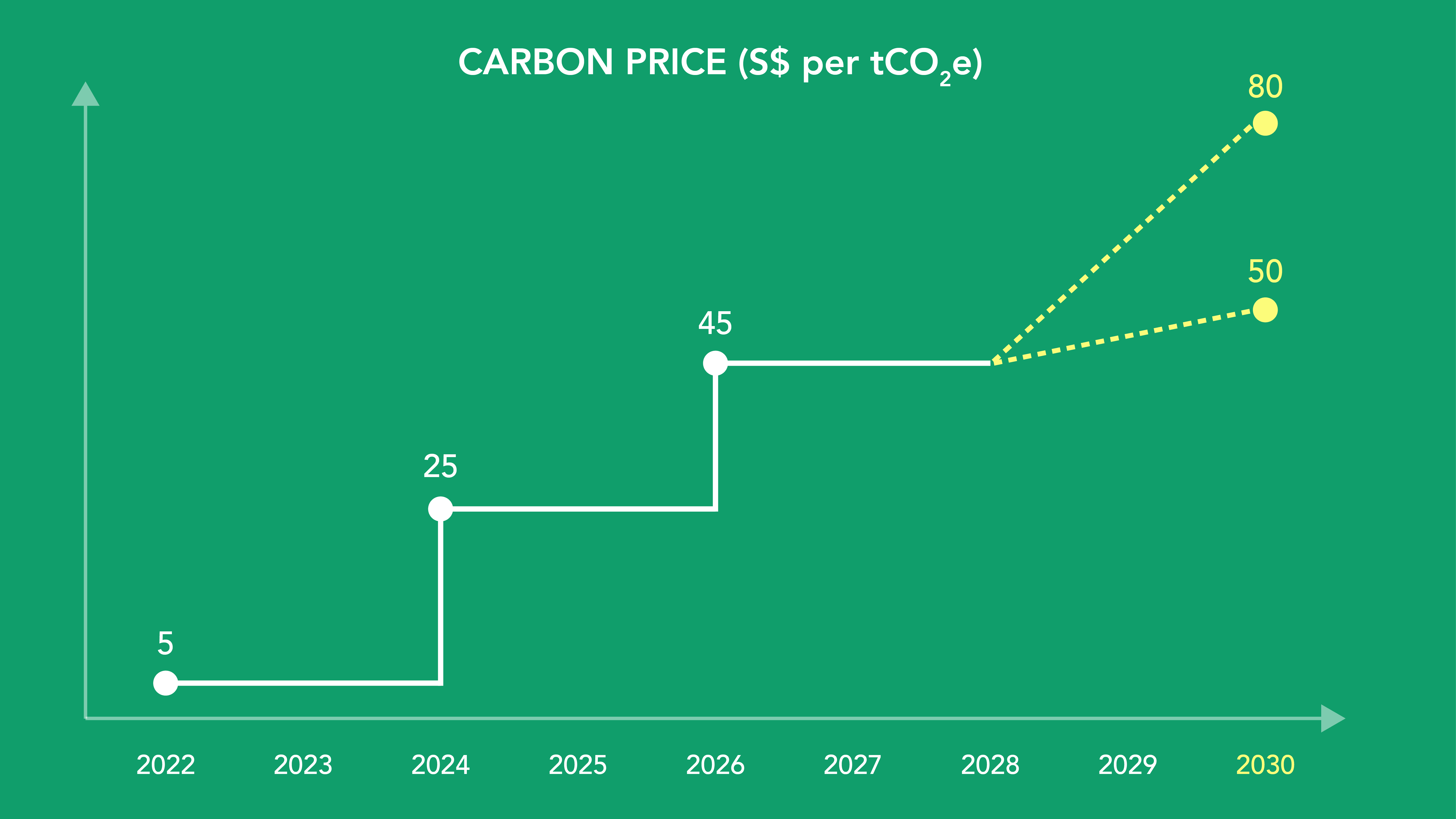
Singapore's planned carbon tax increase roadmap
This approach aims to create a carbon price signal to encourage businesses to reduce emissions without causing a major shock to the economy, which relies heavily on international trade and global competitiveness. Revenue from the carbon tax is used to support emission reduction initiatives and enhance the green competitiveness of industries, while the Singapore government has also committed to considering social impacts and may implement support measures if necessary, reflecting careful consideration between environmental objectives and socio-economic priorities.
Conclusion
The carbon tax has emerged as a powerful economic tool that is increasingly recognized worldwide in the fight against climate change. From diverse international experiences, Vietnam can draw many valuable lessons in designing and implementing a carbon tax policy suited to its economic and social conditions and international commitments.
Carefully considering the options, ensuring fairness, and creating a clear roadmap will be the key factors for a carbon tax to be effective, contributing to driving the transition to a green, sustainable economy and enhancing Vietnam's competitiveness in an international context that increasingly emphasizes environmental factors.