1. Notable figures in the updated 2026 list
2. Compliance roadmap: No longer a matter for the future
3. The GHG data governance challenge: Why is Excel no longer enough?
4. Three core steps businesses need to take now
Conclusion
GHG Inventory Facility List 2026: 1,237 New Facilities to Prepare
The 2026-2030 period marks an important shift for Vietnam from a position of "preparation, voluntary" to "mandatory and substantive" on the roadmap to reduce greenhouse gas (GHG) emissions. Two consecutive legal milestones occurring in the first half of 2026 are the clearest evidence that compliance pressure is steadily mounting on the manufacturing sector.
While in February 2026 the Government officially approved a pilot emission quota of more than 268 million tonnes of CO₂ equivalent for 110 large facilities in the thermal power, iron and steel, and cement sectors, the Ministry of Agriculture and Environment has more recently announced a draft update to the list of facilities required to conduct GHG inventory in 2026, with an unprecedented scale of expansion.
1. Notable figures in the updated 2026 list
According to the latest draft, the list of facilities required to conduct GHG inventory will increase by 1,237 facilities compared with the current list (currently applied under Decision No. 13/2024/QD-TTg with 2,171 facilities).
This increase lies not only in the numbers but also reflects a broad-based management approach by the authorities, covering most of the key industrial sectors:
| Criterion | List under Decision 13/2024/QD-TTg | 2026 draft update | Trend |
|---|---|---|---|
| Total number of facilities | 2,171 facilities | An increase of 1,237 facilities | Expanding the mandatory scope nationwide |
| Applicable sectors | Industry and Trade, Transport, Construction, Natural Resources & Environment | Continued tightening across all 4 sector groups | Increasing monitoring density |
| Notable new feature | The scope of high-tech enterprises not yet clearly defined | Electronic component manufacturing group | Appearing for the first time with a significant share |
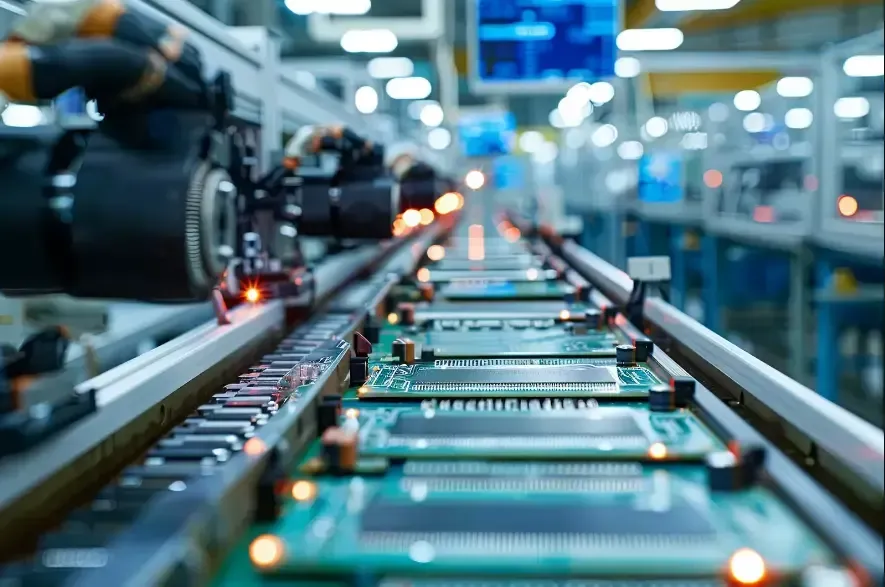
Including the electronic component manufacturing sector on the mandatory list is a strong signal sent to the global supply chains operating in Vietnam. This is a sector that already faces significant pressure from international green barriers - from Europe's CBAM mechanism to the supply chain standards of Apple, Samsung, and Intel - and will now also have to contend with domestic legal barriers.
2. Compliance roadmap: No longer a matter for the future
For business managers, this draft creates two scenarios with differing levels of risk:
For businesses newly added to the list: The transition from not conducting inventory to being required to do so demands significant preparation in terms of personnel, data collection systems, and operating budget. If businesses wait until the list is officially signed and issued before starting implementation, they will fall into a passive position and face considerable legal risk.
For businesses already on the previous list: The allocation of pilot quotas to 110 large facilities in early 2026 is the first shot fired. During this phase, emissions audit standards and verification requirements from independent units and regulators will become increasingly stringent. Reports that are merely reactive or data that is inconsistent will hardly be accepted.
3. The GHG data governance challenge: Why is Excel no longer enough?
One of the biggest challenges factories face when entering the GHG inventory process is the quality of the data system. Many businesses still maintain the habit of managing energy and emissions data through manual Excel files, and this approach is exposing serious gaps:
Risk of accumulated errors: Manually entering raw data from electricity bills, waste, and fuel consumption across multiple departments can easily lead to errors that propagate through each reporting period.
Lack of continuity: Excel only provides a static view at a single point in time and does not help businesses track emissions continuously to make timely reduction decisions.
Difficulty in independent verification: When auditors get involved, tracing the origin of data from scattered files consumes a great deal of time, and the evidence is easily rejected if there is no clear audit-trail system.
4. Three core steps businesses need to take now
To be proactive before the list of 1,237 new facilities is officially applied, experts recommend that businesses focus on the following three foundational transformation steps:
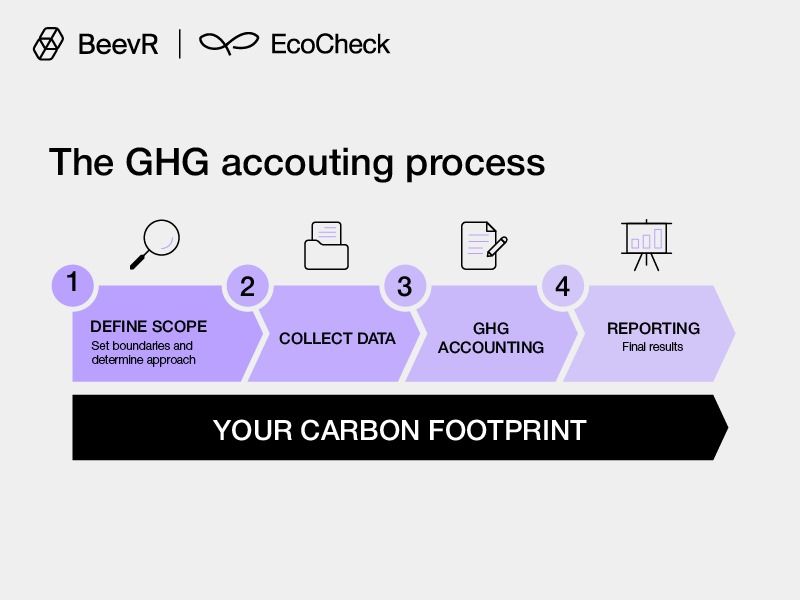
Step 1: Accurately define the emissions boundary
Businesses need to clearly determine their organizational boundary and operational boundary in order to accurately classify direct (Scope 1) and indirect (Scope 2) emission sources according to the specific characteristics of each factory - at a minimum in line with the requirements of Decree 06/2022/ND-CP. Avoid double-counting or omitting emission sources right from the boundary-setting step.
Step 2: Digitize and systematize the data flow
Instead of relying on manual data entry, businesses need to establish a data collection process with clear digital evidence. GHG data needs to be stored centrally, be continuous, and be ready for traceability at any time - this is the minimum condition for passing independent verification rounds. Learn more about international standard methods for collecting emissions data.
Step 3: Standardize according to the statutory structure right from the collection step
Ensure that the format and structure of the output data are fully compatible with the reporting templates prescribed by the Ministry of Agriculture and Environment. Standardizing from the outset helps businesses save maximum time on documentation and avoid having to reprocess all the data when the reporting deadline arrives.
Conclusion
The Net Zero journey and the carbon market in Vietnam are no longer directional concepts - they have become legal regulations with specific sanctions. Accurate emissions data governance not only helps businesses meet the Government's compliance requirements but is also a mandatory condition for maintaining their position in the global supply chain.
The draft list of 1,237 new facilities is still in the consultation phase and will soon be officially issued. Businesses need to proactively stay updated to build an appropriate compliance roadmap - the sooner, the more legal risk is mitigated in the new phase.
Businesses can find out more at ecocheck.ai or leave a question for the EcoCheck team to help review the appropriate inventory scope.
Reference sources:
VnEconomy - Proposal to increase the number of facilities required to conduct GHG inventory in the updated 2026 list (May 2026);
Bao Chinh phu - Decision 263/QD-TTg approving the pilot emission quota for 2025-2026 (February 2026)