Part 1: Introduction to GHG inventory in the Industry and Trade sector
Part 2: Scope of facility-level GHG inventory
1. Direct emission sources
2. Indirect emission sources
The significance of defining the scope
Part 3: Steps for conducting facility-level GHG inventory
1. Define the inventory scope
2. Collect and manage activity data
3. Select appropriate emission factors
4. Establish the inventory methodology
5. Quality control and assurance
Part 4: Quality control and uncertainty assessment
1. Quality control
2. Uncertainty assessment
3. Benefits of quality control and uncertainty assessment
Part 5: Calculating and preparing the GHG inventory report
1. Formula for calculating GHG emissions
2. Calculating CO2 equivalent (CO2e)
3. Preparing the inventory report
4. Factors to note in the report
Part 6: Verifying and finalizing the GHG inventory report
1. The verification process
2. Correcting errors
3. The role of the regulatory authority
4. Benefits of the verification and report finalization process
Part 7: Important considerations for businesses in the Industry and Trade sector
1. Benefits of GHG inventory
2. Points to avoid
3. Support from EcoCheck
4. Reference documents and support contact
Conclusion
Facility-Level GHG Inventory in the Industry and Trade Sector
Part 1: Introduction to GHG inventory in the Industry and Trade sector
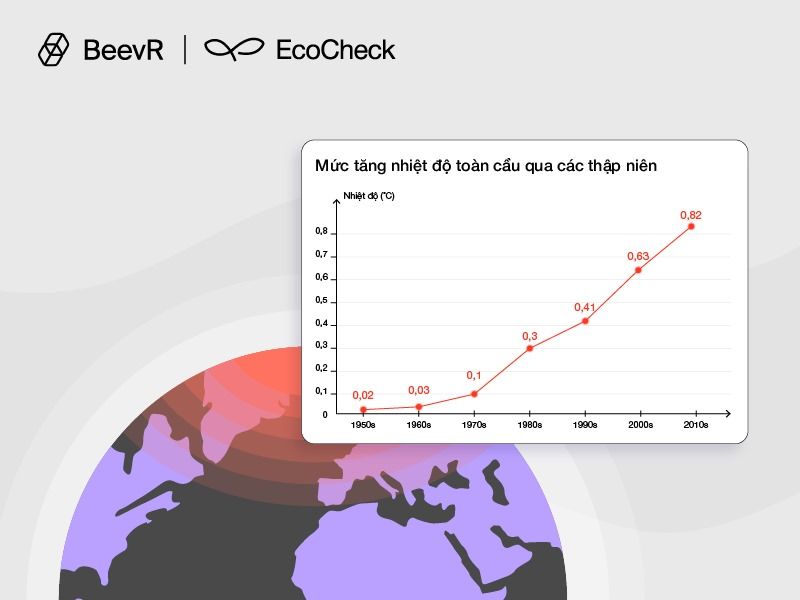
In the context of increasingly complex climate change, greenhouse gas (GHG) inventory has become an important task for industries worldwide. In Vietnam in particular, the Industry and Trade sector plays a key role in the economy but is also a major source of GHG emissions. To meet national emission reduction targets and legal requirements, the Ministry of Industry and Trade has issued Circular 38/2023/TT-BCT, providing detailed regulations on the technical requirements for measurement, reporting, verification of emission reductions, and GHG inventory in the sector.
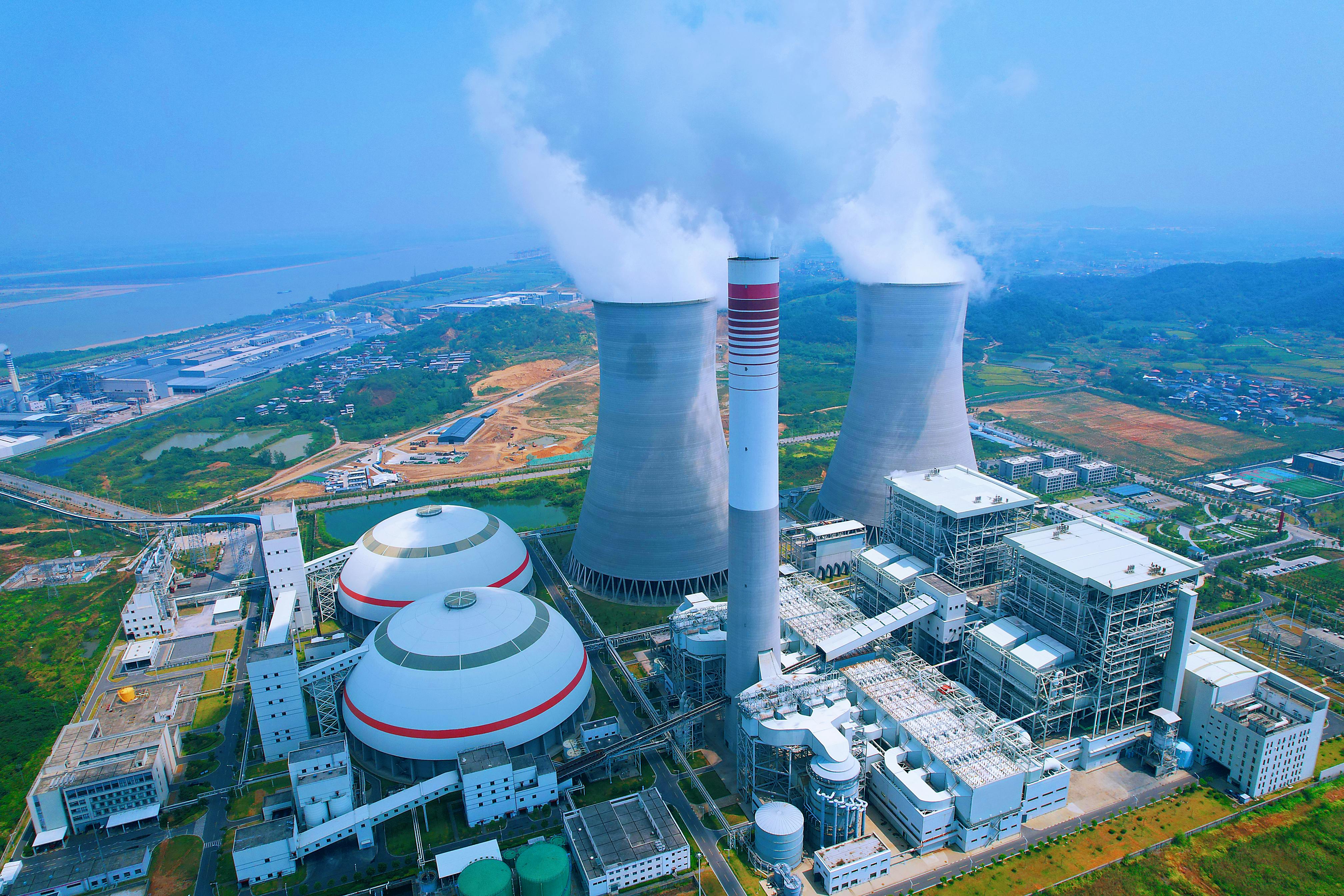
The Ministry of Industry and Trade has issued Circular 38/2023/TT-BCT, providing detailed regulations on the technical requirements for measurement, reporting, verification of emission reductions, and GHG inventory in the sector.
This Circular not only provides a clear legal framework but also serves as a tool to help businesses manage their emissions, optimize resources, and build an environmentally friendly image. Both large and small emitting facilities in the Industry and Trade sector, whether on a mandatory or voluntary basis, are encouraged to conduct inventories to understand their actual emission levels, thereby proposing improvement measures.
This article will provide essential information on the facility-level GHG inventory process in the Industry and Trade sector, the implementation steps, and important considerations. Through this, businesses can not only meet legal requirements but also move toward long-term sustainable development.
Part 2: Scope of facility-level GHG inventory
According to Circular 38/2023/TT-BCT, facility-level GHG inventory applies to direct and indirect emission sources within the management scope of businesses in the Industry and Trade sector. Accurately defining the inventory scope is the first step, helping to ensure complete and transparent data.
1. Direct emission sources
Direct emission sources are activities that generate greenhouse gases right at the facility, including:
- Fuel combustion from stationary sources: Equipment such as boilers, furnaces, turbines, and heaters.
- Fuel combustion from mobile sources: Including transport vehicles during production and operation.
- Industrial processes: Emissions from chemical or physical reactions in the production line.
- Emissions from equipment and machinery: Refrigerant leakage or gas dispersion during production and maintenance.
- Waste management and treatment: Emissions from the facility's waste collection and treatment activities.
2. Indirect emission sources
Indirect emission sources arise from the use of energy supplied externally, specifically:
- Use of electrical energy: Emissions related to electricity consumption in production activities.
- Use of steam energy: Steam purchased from external suppliers for use in production.
The significance of defining the scope
Clearly identifying emission sources helps businesses:
- Accurately assess actual emission levels.
- Develop an effective GHG emission reduction plan.
- Meet national and international standards for environmental management.
Part 3: Steps for conducting facility-level GHG inventory
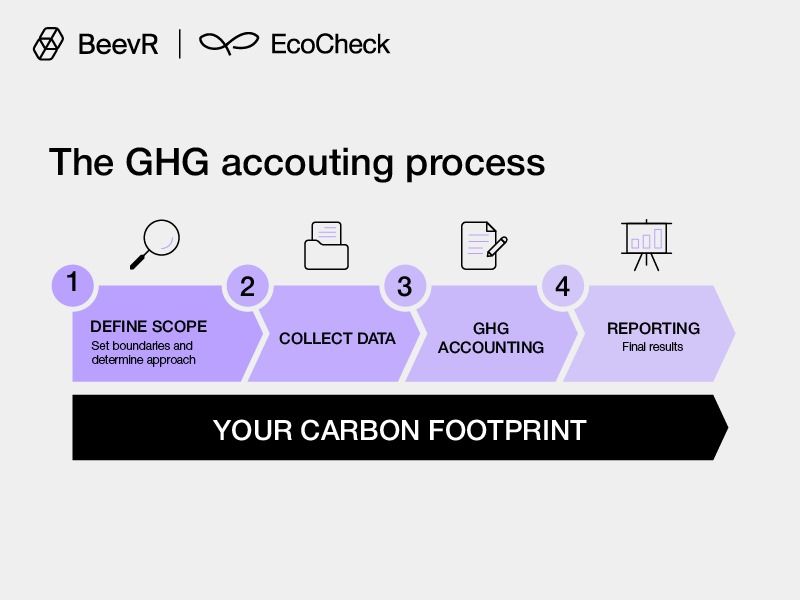
To conduct a GHG inventory accurately and effectively, businesses must follow the process stipulated in Circular 38/2023/TT-BCT. This process includes steps from preparation to report finalization, ensuring transparency and scientific rigor.
1. Define the inventory scope
Businesses need to identify all direct and indirect emission sources within their management scope, including:
- Stationary equipment (boilers, furnaces) and mobile equipment (transport vehicles).
- Industrial processes and activities using electrical energy and steam.
- Waste treatment activities and leakage from equipment.
This is the foundational step that helps businesses avoid overlooking important emission sources.
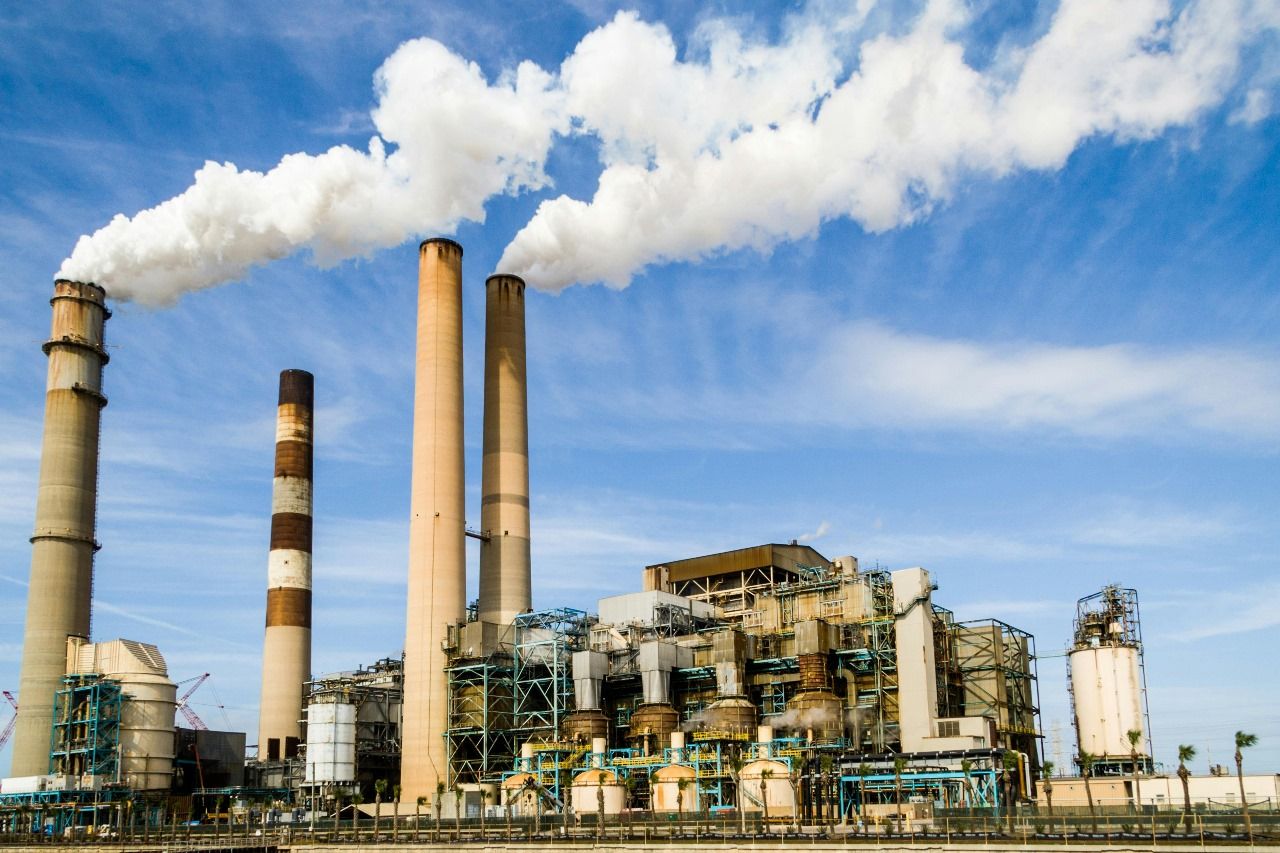
Identify all direct and indirect emission sources within the business
2. Collect and manage activity data
Activity data includes:
- Fuel consumption: Coal, oil, natural gas, electricity, steam.
- Production and extraction output: Indicators related to industrial processes.
- Equipment information: Type, capacity, operating time.
Businesses need to build a centralized data storage system, ensuring continuity and easy retrieval.
3. Select appropriate emission factors
Emission factors are used to convert activity data into GHG emissions. Businesses can:
- Use the emission factors published by the Ministry of Natural Resources and Environment.
- Refer to the guidelines of the IPCC (Intergovernmental Panel on Climate Change).
- Calculate emission factors appropriate to the facility's specific technological process.
4. Establish the inventory methodology
The inventory methodology must follow international standards such as the 2006 IPCC Guidelines or the updated version. The basic calculation formula:
GHGi = ADi × EFi
Where:
- GHGi: GHG emissions of gas type i.
- ADi: Activity data corresponding to gas i.
- EFi: Emission factor of gas i.
5. Quality control and assurance
Businesses need to review the data collection and processing steps, ensuring accuracy, transparency, and consistency. At the same time, errors need to be detected and addressed promptly before preparing the report.
Part 4: Quality control and uncertainty assessment
In the GHG inventory process, quality control and uncertainty assessment are two key factors in ensuring the accuracy and reliability of inventory results. Properly implementing these steps not only meets legal requirements but also helps businesses improve their emission performance.
1. Quality control
The quality control process includes:
- Completeness check: Ensure that all emission sources (direct and indirect) have been fully listed and that activity data is collected continuously.
- Ensuring consistency: Use uniform methods and emission factors across inventory periods.
- Data transparency: Retain and clearly explain the activity data, assumptions, and calculation formulas.
- Accuracy check: Compare results with similar data from previous inventory periods or from other reliable sources.
Example: If CO2 emissions from coal fuel consumption are calculated to have increased sharply compared to previous years, it is necessary to check whether the data on coal consumption or the emission factor contains errors.
2. Uncertainty assessment
Uncertainty in GHG inventory can originate from:
- Activity data: Data such as fuel consumption or extraction output may be inaccurate due to improper recording.
- Emission factors: These factors may vary depending on the actual conditions at the facility, production technology, or scale of operation.
- Inventory methodology: Different methods may lead to inconsistent results.
Businesses need to quantify uncertainty according to IPCC guidelines and implement mitigation steps, such as:
- Use officially published emission factors.
- Perform cross-checks of data.
- Apply advanced calculation tools to reduce errors.
3. Benefits of quality control and uncertainty assessment
- Ensure transparency and legal compliance.
- Increase the reliability of the report: This is an important factor when the facility needs to have the report verified or provide data to partners and investors.
- Support internal improvement: Help businesses identify the stages that generate the most emissions in order to optimize the process.

Quality control and assurance during the GHG inventory process
Part 5: Calculating and preparing the GHG inventory report
After collecting data and performing quality control, the next step in the GHG inventory process is calculating emissions and preparing the report. This is an important stage that helps businesses aggregate and present the inventory results in a scientific and transparent manner.
1. Formula for calculating GHG emissions
The emissions of each type of greenhouse gas are calculated based on the formula:
GHGi = ADi × EFi
Where:
- GHGi: Emissions of gas type i (tonnes).
- ADi: Activity data (e.g., fuel consumption, production output).
- EFi: Emission factor corresponding to gas type i (kg/tonne or kg/MWh).
Example: A production facility uses 1,000 tonnes of coal (the EF of coal is 2.5 tonnes CO2/tonne).
- CO2 emissions = 1,000 × 2.5 = 2,500 tonnes CO2.
2. Calculating CO2 equivalent (CO2e)
To compare the impact of different types of gases, emissions are converted into CO2 equivalent based on the Global Warming Potential (GWP) factor:
TPTi = GHGi × GWPi
Where:
- TPTi: Total CO2 equivalent emissions of gas i.
- GWPi: Global Warming Potential factor of gas i (e.g., the GWP of CH4 is 28, and N2O is 265).
3. Preparing the inventory report
The facility-level GHG inventory report must follow the prescribed template and include the following main contents:
- Introduction: An overview of the facility, the inventory scope, and the emission sources.
- Methodology: Present the formulas, emission factors, and calculation methods used.
- Inventory results: A summary table of the emissions of each GHG type and the total CO2 equivalent emissions.
- Quality control: The steps taken to check data and assess uncertainty.
- Appendix: Provide details on activity data, emission factors, and reference documents.
4. Factors to note in the report
- Transparency: The data and calculation methods must be clearly explained.
- Legal compliance: The report must meet the requirements of Circular 38/2023/TT-BCT.
- Meeting internal and external objectives: The report not only serves the verification process but can also be used to communicate with stakeholders such as investors and partners.
Part 6: Verifying and finalizing the GHG inventory report
After finalizing the GHG inventory report, verification is an important step to ensure the accuracy and transparency of the results. This process helps businesses detect and correct errors while increasing the reliability of the report before submitting it to the regulatory authority or stakeholders.
1. The verification process
The verification process for the facility-level GHG inventory report is carried out through the following main steps:
- Compliance check: Ensure that the report complies with the requirements in Circular 38/2023/TT-BCT.
- Data reconciliation: Compare the data in the report with actual information sources, including:
- Activity data from the production process, energy consumption, and waste management.
- The emission factors used in the calculations.
- Risk analysis: Assess factors that may cause deviations in the report, such as data entry errors or errors in the inventory methodology.
- Field inspection (if necessary): Conduct on-site inspection at the facility to assess the operating condition of the equipment and the accuracy of the measured data.
2. Correcting errors
During the verification process, common errors may include:
- Missing or inconsistent data.
- Emission factors that do not match actual production.
- Errors in the way calculation formulas are applied.
When errors are detected, businesses need to:
- Collect additional data or clarify uncertain factors.
- Adjust the emission factors or calculation methods if necessary.
- Update the report and fully retain the documents supporting the adjustments.
3. The role of the regulatory authority
The GHG inventory report must be submitted to the competent regulatory authority for official verification. This process helps to:
- Confirm compliance: Ensure the report meets legal standards and requirements.
- Support improvement: Provide recommendations for businesses to improve their inventory process in the future.
4. Benefits of the verification and report finalization process
- Ensure reliability: Increase the likelihood of the report being accepted by the regulatory authority and partners.
- Build reputation: Help businesses demonstrate their commitment to transparency and environmental responsibility.
- Sustainable development: Support businesses in improving their emission management activities, contributing to cost reduction and resource optimization.
Part 7: Important considerations for businesses in the Industry and Trade sector
GHG inventory is not only a legal requirement but also an opportunity for businesses in the Industry and Trade sector to optimize their operations and enhance their brand value. For this process to deliver maximum effectiveness, businesses need to note some important points.
1. Benefits of GHG inventory
- Process optimization: Identify and reduce major emission sources, thereby saving energy and costs.
- Meeting legal requirements: Comply with Circular 38/2023/TT-BCT and national requirements on climate change.
- Enhancing brand value: Demonstrate environmental responsibility, helping to increase reputation and attract customers and investors.
2. Points to avoid
- Overlooking emission sources: Some indirect emission sources such as electricity consumption or refrigerant leakage are easily overlooked without an adequate monitoring system.
- Data deviations: Inaccurate or non-transparent data can lead to a report that fails to meet verification requirements.
- Lack of a long-term plan: Focusing only on a one-time inventory without building a long-term emission reduction strategy.
3. Support from EcoCheck
EcoCheck provides professional GHG inventory solutions, helping businesses:
- Meet legal standards: With an automated system that is continuously updated according to the latest guidelines of the Ministry of Industry and Trade and the IPCC.
- In-depth consulting: Support businesses from defining the scope and collecting data to preparing the report and improving emission performance.
- Accurate measurement tools: Integrate emission calculation and reporting tools in accordance with the requirements of Circular 38/2023/TT-BCT.
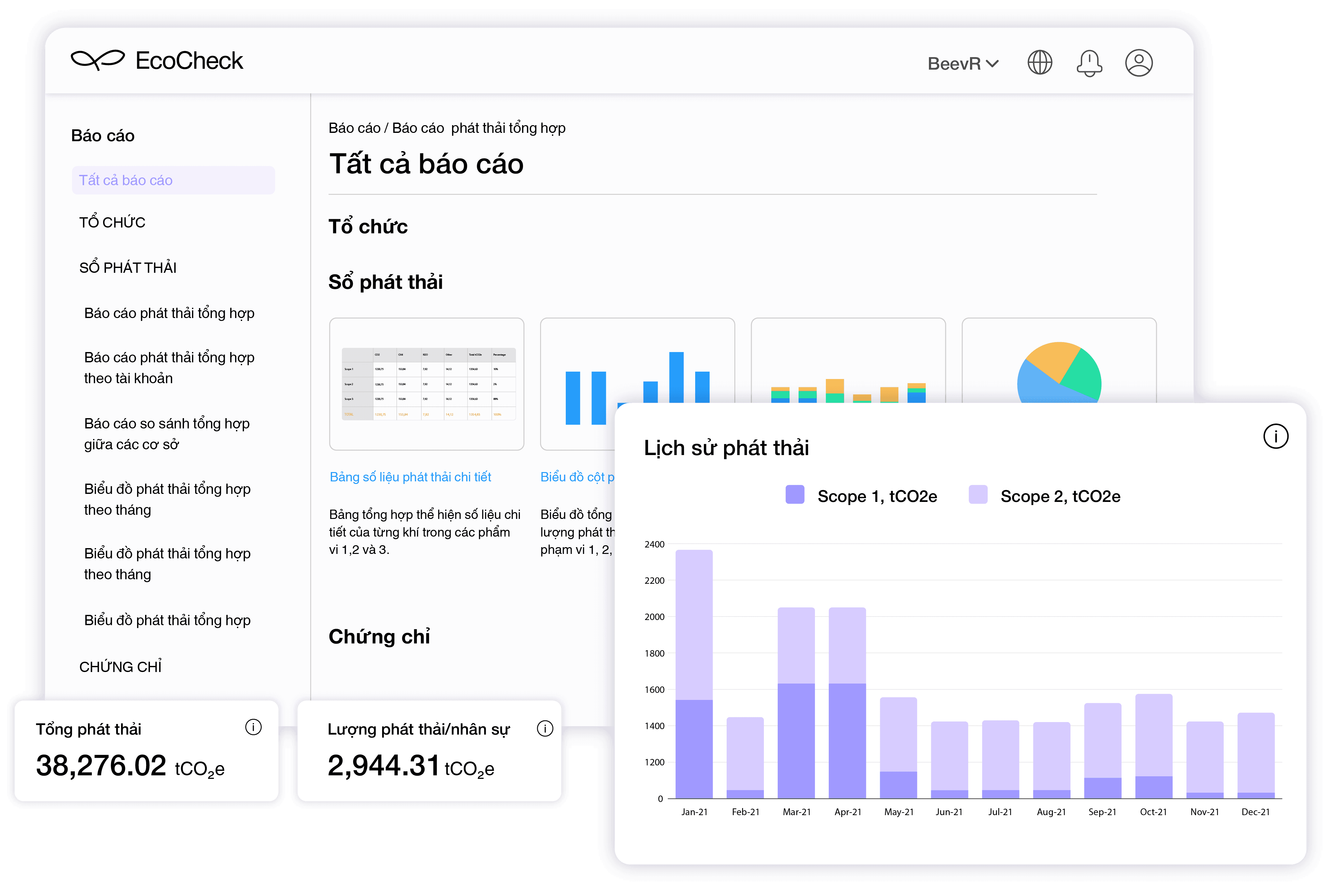
EcoCheck provides professional GHG inventory solutions
4. Reference documents and support contact
- Documents: Circular 38/2023/TT-BCT, the 2006 IPCC Guidelines, and the calculation tools of the Ministry of Natural Resources and Environment.
- Contact: EcoCheck is ready to support businesses in the Industry and Trade sector through its GHG inventory services, emission reduction consulting, and environmental management technology deployment.
Conclusion
Facility-level GHG inventory is not only a responsibility but also an opportunity for businesses in the Industry and Trade sector to achieve sustainable development. With EcoCheck as a companion, businesses can not only meet legal requirements but also create outstanding value on their journey to protect the environment.
CONTACT INFORMATION:
BeevR Technology Co., Ltd
Address:
- Hanoi Office: 125 Hoang Ngan, Trung Kinh, Cau Giay, Hanoi
- Hotline: 037.6869.366
- Email: [email protected]
- Website: https://ecocheck.ai/