Definition of a carbon credit
Why are carbon credits important?
Driving greenhouse gas emission reductions
Supporting sustainable development
Strengthening corporate responsibility
How the Carbon Credit Market Works
The process of generating carbon credits
What is the carbon credit trading market?
How to calculate the amount of carbon consumed
Methods for calculating carbon credits
Performance-based method
Some carbon emission calculation tools
Regulations on carbon credits in Vietnam
Law on Environmental Protection 2020
Decision 01/2022/QD-TTg
Decree 06/2022/ND-CP
The potential of the carbon credit market in Vietnam
Conclusion
What Is a Carbon Credit? What Businesses Need to Know
Definition of a carbon credit
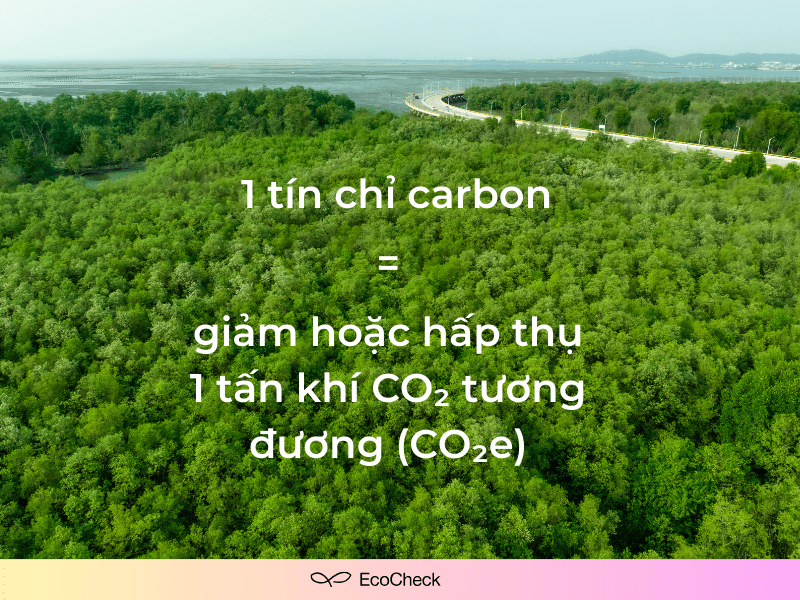
A carbon credit is a tradable permit representing the reduction or removal of one tonne of carbon dioxide (CO₂) - or an equivalent amount of other greenhouse gases - from the atmosphere. It is like a "green certificate" showing that a specific emission-reduction action has been carried out and verified.

Organizations or projects that carry out emission-reduction activities (for example, reforestation, using renewable energy, or improving energy efficiency) can generate these credits. The credits can then be purchased by other organizations (usually businesses whose emissions exceed their targets) to offset the emissions they produce.
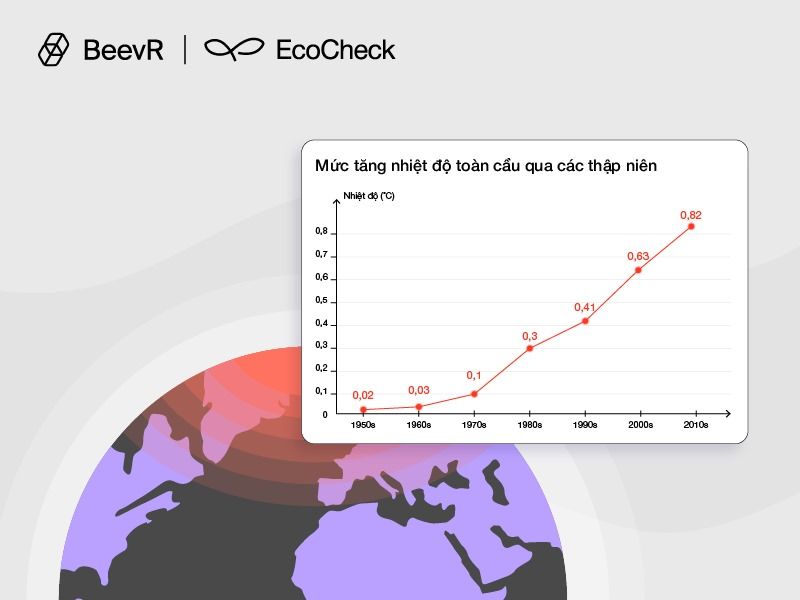
Carbon credits create an economic value for emission reductions, incentivize environmental protection actions, and contribute to the shared goal of limiting global warming.
Why are carbon credits important?
Driving greenhouse gas emission reductions
Carbon credits play a pivotal role in driving greenhouse gas emission reductions through the economic mechanism they create. Rather than relying solely on mandatory regulations, carbon credits provide a powerful financial incentive for organizations and businesses to proactively cut their emissions.
When an emission-reduction project is implemented and the emissions are verified, the carbon credits generated become a valuable asset that can be traded on the market. This encourages green activities, from investing in clean technology and improving energy efficiency to protecting and developing forests.
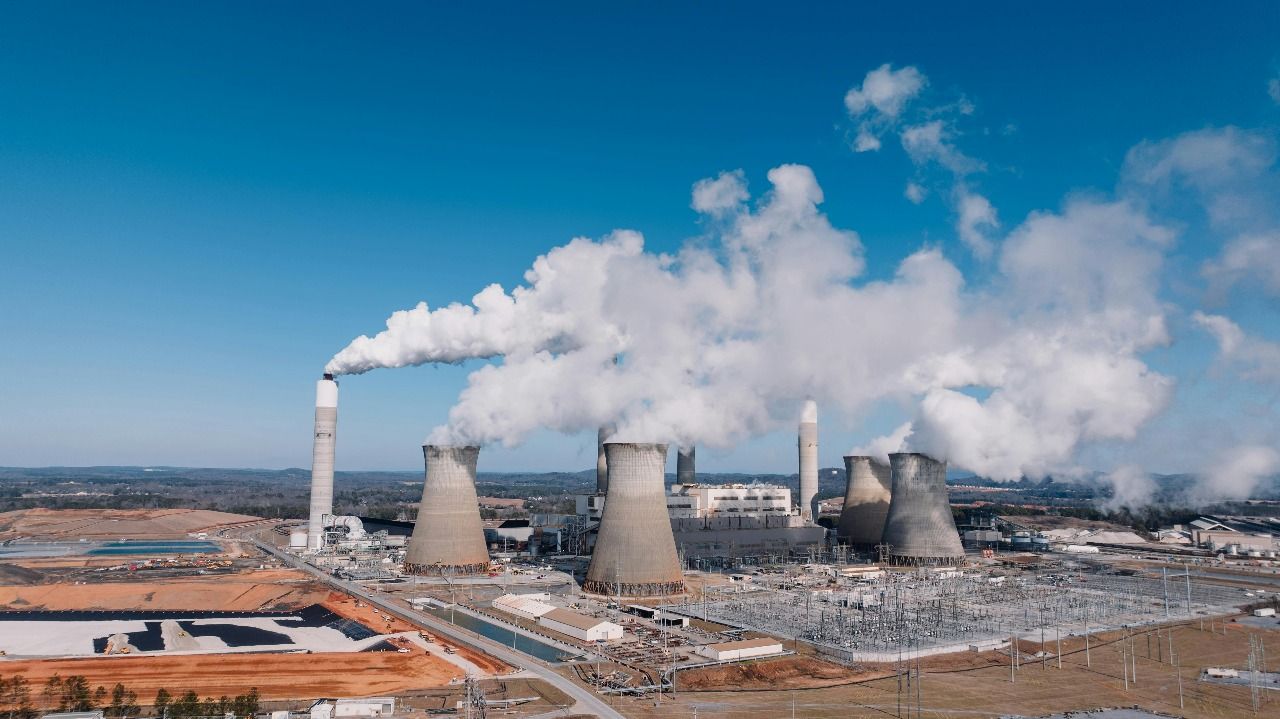
Moreover, carbon credits create a mechanism for organizations that find it difficult to reduce emissions directly to offset their remaining emissions by supporting emission-reduction projects elsewhere. This not only helps achieve shared emission-reduction goals but also channels investment capital into green solutions, driving innovation and sustainable development worldwide
Supporting sustainable development
In addition to directly driving emission reductions, carbon credits also make an important contribution to supporting sustainable development across many dimensions. Projects that generate carbon credits often come with additional environmental and social co-benefits.
For example, reforestation projects not only absorb CO₂ but also conserve biodiversity, prevent soil erosion, and create livelihoods for local communities. Renewable energy projects help reduce dependence on fossil fuels, improve air quality, and create green jobs.
By generating a financial flow for these activities, carbon credits encourage the development of green industries and sustainable solutions. They give developing countries the opportunity to access capital to carry out environmentally friendly projects, while contributing to the achievement of the United Nations Sustainable Development Goals (SDGs) - not only on climate but also on poverty reduction, protection of natural resources, and the promotion of green economic growth.
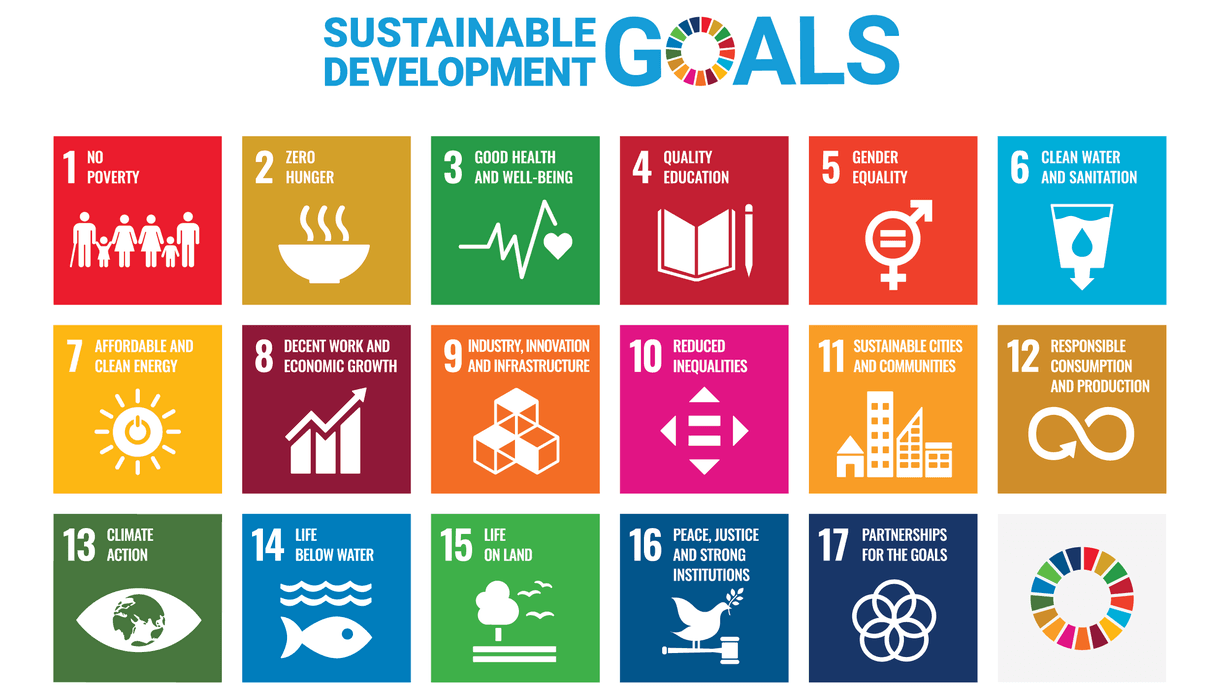
The 17 United Nations Sustainable Development Goals (SDGs)
Strengthening corporate responsibility
Carbon credits play an important role in strengthening corporate responsibility toward climate change. Through this mechanism, businesses not only comply with legal regulations but also become more proactive in managing and minimizing their environmental impact. Purchasing carbon credits becomes a concrete action, demonstrating a company's commitment to offsetting its remaining emissions after direct reduction efforts.
Moreover, the carbon credit market creates an invisible but effective pressure on businesses. This pressure comes from investors, customers, and communities who are increasingly concerned with environmental, social, and governance (ESG) factors. Disclosing information about the purchase and use of carbon credits helps strengthen a company's transparency and accountability. Businesses that actively participate in the carbon credit market are often seen as pioneers, environmentally conscious, and building a sustainable brand image over the long term. Carbon credits are not only a financial tool but also an important measure of a company's environmental responsibility amid an increasingly urgent climate change situation.
How the Carbon Credit Market Works
The process of generating carbon credits
First, a greenhouse gas emission-reduction project within a business is implemented. This could be activities such as building a wind power plant, installing a solar energy system, implementing energy-efficiency measures in production, or forest planting and protection projects.
Next, the actual amount of greenhouse gases reduced or absorbed by this project is measured and assessed objectively and accurately. The measurement methods must comply with current international or national standards and regulations to ensure reliability.
After the emission reductions are verified, an independent certification body conducts an appraisal and issues certification for these emission reductions. Each carbon credit typically corresponds to the reduction or absorption of one tonne of CO₂ equivalent*.
Finally, these certified carbon credits are recorded in a registry, ensuring uniqueness and preventing double counting. At this point, the carbon credits are ready to be traded on the market.
The process of generating carbon credits is rigorous, requiring transparency and compliance with strict standards to ensure that each credit represents a real and valuable emission-reduction action.
*What is CO₂ equivalent?
To simplify comparing the impact of different greenhouse gases, the concept of CO₂ equivalent (CO₂e) was introduced. Essentially, CO₂e is a unified unit of measurement that expresses the amount of another greenhouse gas converted into the amount of carbon dioxide that has an equivalent greenhouse effect over a given period (usually 100 years).
This means that instead of separately listing the emissions of methane (CH₄), nitrous oxide (N₂O), or fluorinated gases, we convert them into a single value based on the Global Warming Potential (GWP) of each gas relative to CO₂.
For example, one tonne of methane has a much higher global warming potential than one tonne of CO₂, so it is counted as a larger amount of CO₂e. Using CO₂e gives us an overall view and makes it easy to compare the total greenhouse gas emissions of a country, an industry, or an organization.
What is the carbon credit trading market?
The carbon credit trading market is a highly promising economic mechanism designed to drive the reduction of greenhouse gas emissions, especially CO₂. In essence, it is a system that works by setting emission limits for responsible parties while allowing the buying and selling of "carbon credits" corresponding to the amount of emissions reduced or absorbed.
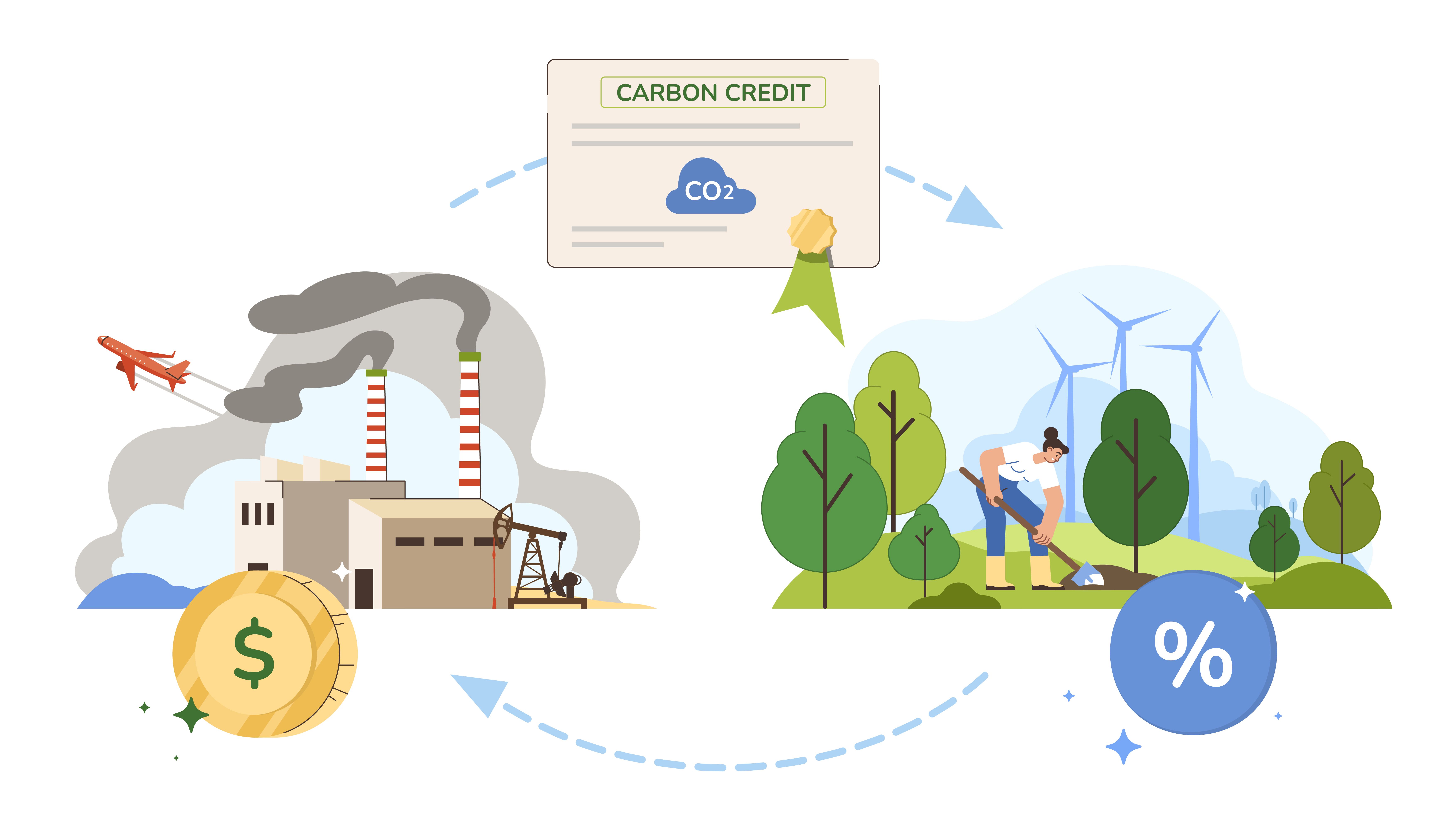
Specifically, companies or organizations that achieve emission reductions below the prescribed threshold will generate surplus carbon credits. These credits can then be sold to other entities whose emissions exceed the permitted limit.
This mechanism creates a powerful economic incentive, encouraging entities to seek out and implement cost-effective emission-reduction solutions, because reducing emissions not only helps them comply with regulations but can also generate profit from selling credits.
According to the Ministry of Agriculture and Rural Development, the carbon market is increasingly affirming its role as an advanced approach. The essence of this market is the trading of greenhouse gas emissions that have been reduced or absorbed, and these transactions usually take place between domestic businesses or international organizations.
The strong growth in transaction volume and the participation of many organizations demonstrate the enormous potential of the carbon credit market in the global effort against climate change, with deep roots in the 1997 Kyoto Protocol.
Some carbon credit certification bodies around the world
To ensure the transparency, quality, and value of carbon credits, the role of carbon credit certification bodies around the world is extremely important. These organizations operate independently, establish rigorous standards, and carry out thorough appraisal processes to verify the actual amount of greenhouse gases reduced or absorbed by projects. Certification from reputable bodies builds buyer confidence and ensures that carbon credits represent genuine and impactful emission-reduction efforts.
Some prominent carbon credit certification bodies globally include:
Verra:
- Renowned for the Verified Carbon Standard (VCS).
- One of the most widely used standards globally.
- Applicable to many different types of emission-reduction projects.
Gold Standard:
- Known for its rigorous standards.
- Emphasizes co-benefits for sustainable development and local communities.
- Ensures high integrity of the credits.
Climate Action Reserve (CAR):
- Focuses mainly on emission-reduction projects in North America.
- Establishes protocols for many types of projects.
Other national/regional standards and organizations:
- Increasingly developing to suit each local context.
- Examples: standards in China, South Korea, the European Union, Australia, etc.
Each organization has its own processes and requirements, but the common goal is to ensure the environmental and social integrity of the carbon credits generated. Choosing credits from projects certified by reputable bodies is a key factor in ensuring the real effectiveness of carbon offsetting activities.
The main types of carbon markets
Compliance carbon market (ETS - Emission Trading Scheme)
The compliance carbon market is formed on the basis of mandatory policies and legal regulations from governments or international organizations, requiring emitters (usually large businesses, heavy industries, or power plants) to comply with established emission targets or limits.
To achieve compliance, these businesses can choose one or a combination of measures such as reducing emissions directly at the source, investing in clean technology, or purchasing carbon credits from eligible emission-reduction projects.
Voluntary Carbon Market
In contrast to the compliance market, the voluntary carbon market operates based on the voluntary decisions of organizations, businesses, or individuals who want to offset the carbon emissions they produce for purposes such as corporate social responsibility (CSR), building a green brand, or simply out of environmental awareness. In this market, entities in need purchase carbon credits generated from emission-reduction or greenhouse gas absorption projects around the world.
In contrast to the compliance market, the voluntary carbon market operates based on the voluntary decisions of organizations, businesses, or individuals who want to offset the carbon emissions they produce for purposes such as corporate social responsibility (CSR), building a green brand, or simply out of environmental awareness. In this market, entities in need purchase carbon credits generated from emission-reduction or greenhouse gas absorption projects around the world.
How to calculate the amount of carbon consumed
To determine the amount of carbon consumed in the form of carbon credits, a business needs to start by calculating the total greenhouse gas emissions (usually expressed in CO₂ equivalent - CO₂e) from its activities over a given period (for example, annually). Each tonne of CO₂e emitted into the environment can be understood as equivalent to "consuming" one unit of carbon that needs to be offset.
For example, consider a cement manufacturing plant. After conducting a GHG inventory, this plant determines that its total CO₂e emissions for the year are 15,000 tonnes. If no emission-reduction activities are carried out directly at the plant or through the purchase of carbon credits, we can say that this plant has "consumed" 15,000 units of carbon.
In the context of emission-limit regulations or emission-reduction target commitments, this calculation becomes even more important. Suppose the cement plant above has an annual emission quota of 10,000 tonnes CO₂e.
With actual emissions of 15,000 tonnes CO₂e, this plant has exceeded its quota by 5,000 tonnes CO₂e. To comply with the regulations or meet its target, the plant can purchase 5,000 carbon credits from projects or organizations with lower emissions or that have carried out corresponding emission-reduction activities. Thus, the number of carbon credits the plant "consumes" to offset its excess emissions is 5,000.
Methods for calculating carbon credits
Calculating the number of carbon credits generated or needing to be purchased requires a careful calculation process, based on the actual amount of greenhouse gases reduced or absorbed. There are currently two methods for calculating carbon credits; however, these methods can be flexibly adjusted depending on the type of emission-reduction project and the standards involved.
Activity-based method
Among the methods for calculating carbon credits, the activity-based method is a common and intuitive approach.
This method focuses on collecting data on specific activities that cause greenhouse gas emissions, then multiplying by the corresponding emission factors to estimate the amount of emissions.

Formula for calculating emissions using the activity-based method
For example, to calculate emissions from electricity use, a business collects data on total electricity consumption (kWh) and multiplies it by the average carbon emission factor of the national grid (tonnes CO₂e/kWh).
Similarly, to calculate emissions from transportation activities, data on the amount of fuel consumed (liters or kg) is multiplied by the corresponding emission factor for that type of fuel. For production processes, data on input material quantities, output volume, and other technical parameters are used in combination with emission factors specific to that industry and process.
Performance-based method
The performance-based method focuses on measuring and rewarding carbon credits based on improvements in resource-use efficiency or reductions in emission intensity relative to an established baseline. Instead of only calculating absolute emissions, this method encourages activities that reduce emissions per unit of product, service, or area.
The basic formula for calculating the amount of emissions reduced using this method can be expressed as follows:

Formula for calculating emissions using the performance-based method
The amount of emissions reduced is then converted into carbon credits, with each credit typically corresponding to one tonne of CO₂e reduced or absorbed.
Example: Consider a cement manufacturing plant working to reduce emissions. Before investing in new technology, the plant emitted 0.8 tonnes CO₂e per tonne of cement produced. After applying advanced technology, emissions dropped to 0.6 tonnes CO₂e per tonne of cement produced. Suppose that in that year, the plant produced 100,000 tonnes of cement.
Emissions before the project (estimated based on current output and the old efficiency):
0.8 tonnes CO₂e/tonne of cement x 100,000 tonnes of cement = 80,000 tonnes CO₂e
Emissions after the project (based on current output and the new efficiency):
0.6 tonnes CO₂e/tonne of cement x 100,000 tonnes of cement = 60,000 tonnes CO₂e
Emissions reduced:
80,000 tonnes CO₂e - 60,000 tonnes CO₂e = 20,000 tonnes CO₂e
In this case, the plant can receive 20,000 carbon credits corresponding to the emissions reduced through improved production efficiency. This method encourages businesses not only to reduce total emissions but also to optimize processes to achieve lower emission intensity per unit of product.
>>> See also: EcoCheck GHG inventory services
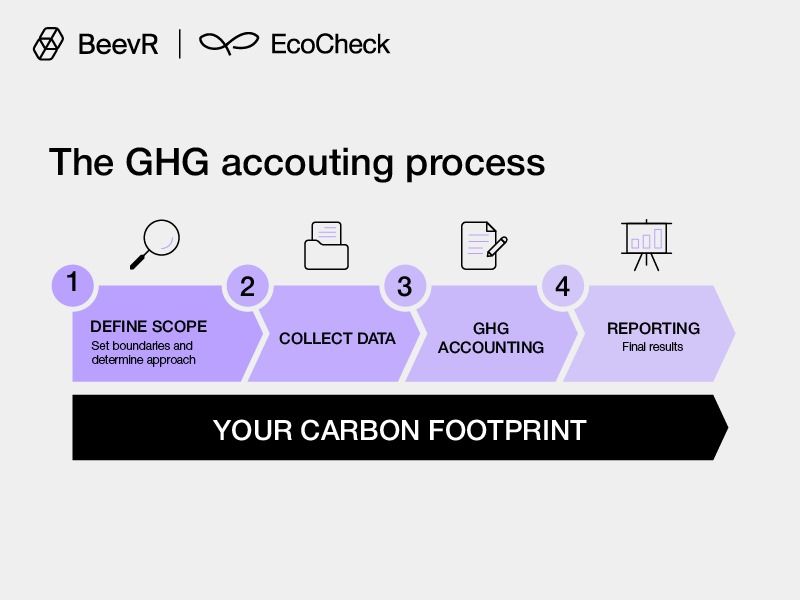
Some carbon emission calculation tools
To support organizations and businesses in inventorying and calculating carbon emissions effectively, there are now a variety of carbon emission calculation tools. These tools can differ in complexity, scope of application, and level of detail, but all aim to help users quantify the climate impact of their activities.
>>> See also: Top 5 tools and software for GHG inventory
Regulations on carbon credits in Vietnam
In Vietnam, the legal framework for carbon credits is in the process of being formed and developed, reflecting the country's commitment to achieving its greenhouse gas emission-reduction goals.
Law on Environmental Protection 2020
The Law on Environmental Protection 2020 marks an important step forward in establishing the legal framework for carbon credits in Vietnam. Article 3, Clause 35 of the Law officially defines: "A carbon credit is a commercially tradable certificate representing the right to emit one tonne of carbon dioxide (CO₂) or one tonne of carbon dioxide (CO₂) equivalent."
This definition is the first legal foundation, clearly affirming the nature of carbon credits as a commodity that can be bought, sold, and exchanged. The Law on Environmental Protection 2020 also provides the legal basis for organizing and developing the carbon market in Vietnam under Article 139. This includes provisions on allocating emission quotas to large emitters, mechanisms for exchanging and trading carbon credits, as well as the establishment of a domestic carbon credit exchange.
Decision 01/2022/QD-TTg
Under Decision 01/2022/QD-TTg, sectors and facilities with greenhouse gas emissions above a certain threshold must conduct a GHG inventory every two years. This list includes many important economic sectors such as energy, transport, construction, industry, agriculture and forestry, and waste management. Conducting a GHG inventory is the first and essential step for these facilities to understand their emissions clearly, and from there to build emission-reduction plans and prepare to participate in carbon market mechanisms once they are officially deployed. This Decision is an important part of the roadmap for developing the carbon market in Vietnam, laying the groundwork for identifying potential parties to participate in carbon credit trading in the future.
Decree 06/2022/ND-CP
Decree 06/2022/ND-CP clearly stipulates the roadmap for developing the carbon market, divided into a preparation phase (until the end of 2027) and an official operation phase (from 2028). During the preparation phase, the main activities include developing regulations on carbon credit management, exchange operating rules, and piloting exchange and offset mechanisms for credits. The official operation phase will see the launch and operation of the carbon credit exchange, as well as regulations on connecting with regional and international markets.
In addition, the Decree also identifies the participants in the carbon market, including large emitters on the GHG inventory list, organizations implementing domestic and international carbon credit exchange and offset mechanisms, and organizations and individuals involved in investing in and trading emission quotas and carbon credits.
The potential of the carbon credit market in Vietnam
The carbon credit market in Vietnam is emerging as an enormous potential for domestic businesses, opening up many new business opportunities and driving the economy's green transition. With the legal framework gradually being completed - especially the introduction of Decree 06/2022/ND-CP and the carbon market development roadmap - Vietnamese businesses can benefit from generating and trading carbon credits through emission-reduction or greenhouse gas absorption projects. According to the Ministry of Natural Resources and Environment, from 2028, Vietnam will officially deploy a greenhouse gas emissions trading system to reduce emissions in line with its commitments at COP26.
Sectors such as renewable energy (wind power, solar power), forestry (planting and protecting forests), sustainable agriculture (reducing emissions from crops and livestock), and waste management have great potential for generating carbon credits. Businesses that pioneer these projects not only contribute to the national emission-reduction target but can also create a new revenue stream from selling credits on the market.

Moreover, participating in the carbon credit market can help Vietnamese businesses enhance their reputation and brand image in the international market, attracting investors and partners interested in sustainability. It is also an opportunity for businesses to access green finance, drive technological innovation, and improve competitiveness amid globalization and increasingly high demands for environmental protection.
>>> See also: Solutions & a roadmap for building a greenhouse gas emission-reduction plan
Conclusion
Carbon credits have become a key economic tool in the fight against climate change. They not only create value for greenhouse gas emission reductions but also drive sustainable development, strengthen corporate responsibility, and open up promising new business opportunities - especially for Vietnamese businesses as the legal framework is gradually being completed.
To effectively tap the potential of the carbon credit market, the first and most important step is to understand clearly how much greenhouse gas your business is emitting. EcoCheck is proud to be a professional and reputable provider of GHG inventory services, helping businesses accurately measure their emissions, identify their main emission sources, and build an effective emission-reduction roadmap.
Understanding the process of generating carbon credits, the calculation methods, the reputable certification bodies, as well as the difference between the compliance and voluntary markets, is an important foundation for stakeholders to participate effectively in this market. With significant progress in building the legal framework in Vietnam, the carbon credit market promises to make an increasingly large contribution to the national emission-reduction target, while delivering practical economic and environmental benefits for both businesses and communities. Grasping and effectively leveraging the opportunities from the carbon credit market is not only a responsibility but also a competitive advantage for businesses.