Emission reduction with a plan: targets, measures, tracking.
From inventory to reduction plan: find the largest sources, set targets by scope, link measures and track monthly on EcoCheck, or simply ask your AI assistant.
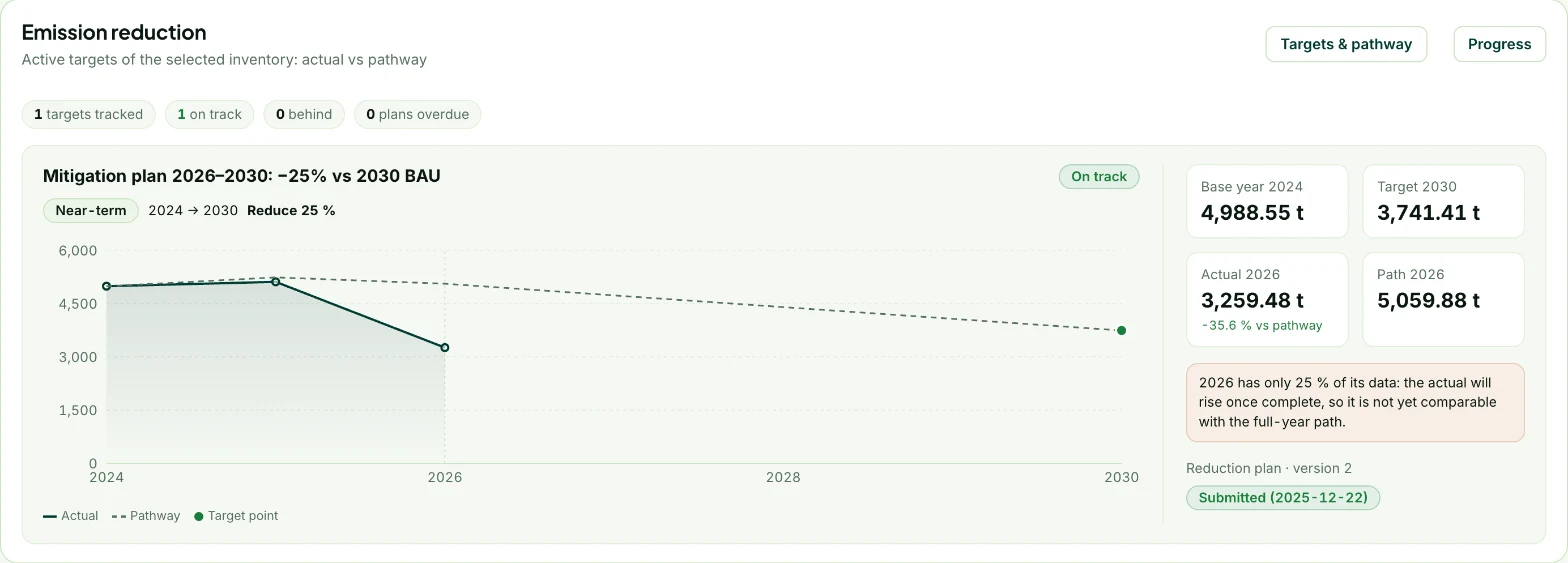
Straight-line cut from 2024 to 2030. MWh equivalent uses the 2024 grid factor (0.6187 tCO₂/MWh).
Who must plan reductions, and who does it voluntarily
Facilities on the inventory list
- Prepare a mitigation plan (KHGN) by sector.
- From 2027: mitigation results report before 31 March each year.
Thermal power, iron and steel, cement
- Surrender allowances by 31 December of the following year.
- Borrow up to 15 %, offset up to 30 % with credits.
Suppliers and exporters
- Customers and parent companies ask for SBTi-style targets.
- Green loans, ESG reports, lower CBAM cost.
In the software: find sources, set targets, track
Crops from the EcoCheck software, sample data.
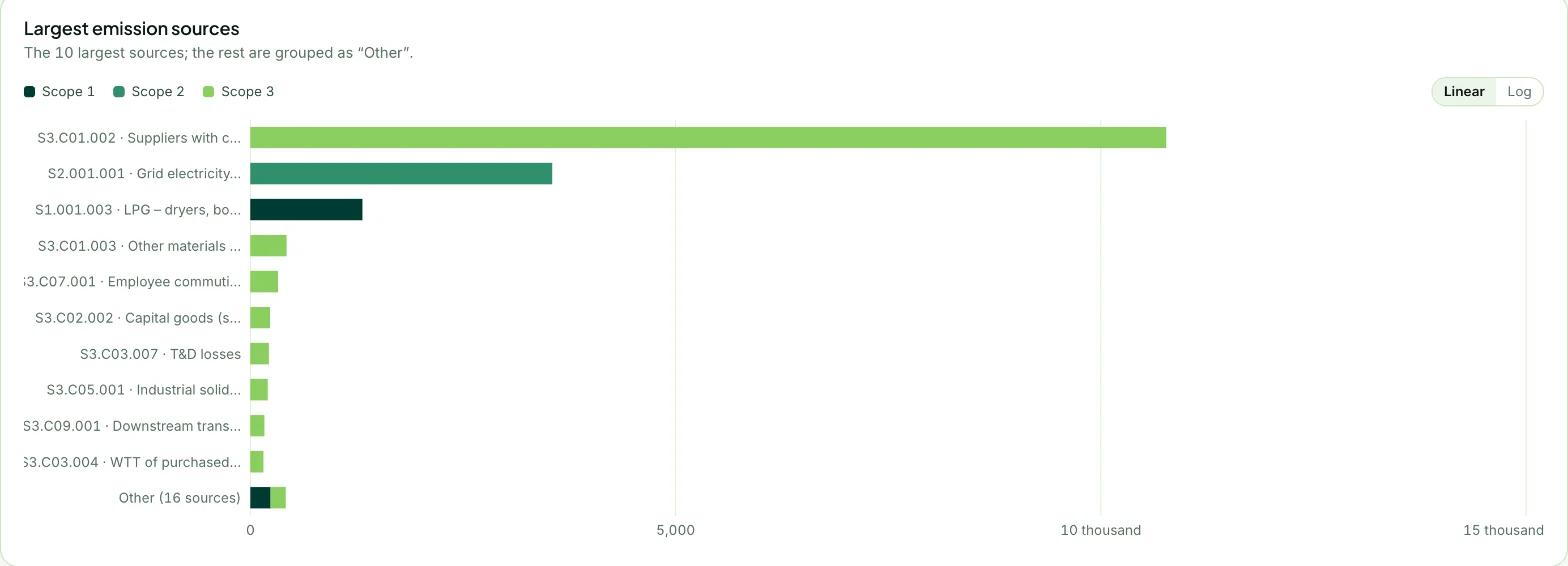
Find the largest sources to tackle first
- Rank sources by Scope 1, 2, 3, by site and month, straight from the inventory.
- See which source each measure targets and how many tonnes it saves.
Set targets, build the pathway, link measures
- Base year, target year, % cut against the base year or BAU, per scope.
- Measures by group: energy, fuels, process, transport, waste; versioned plans for filing.
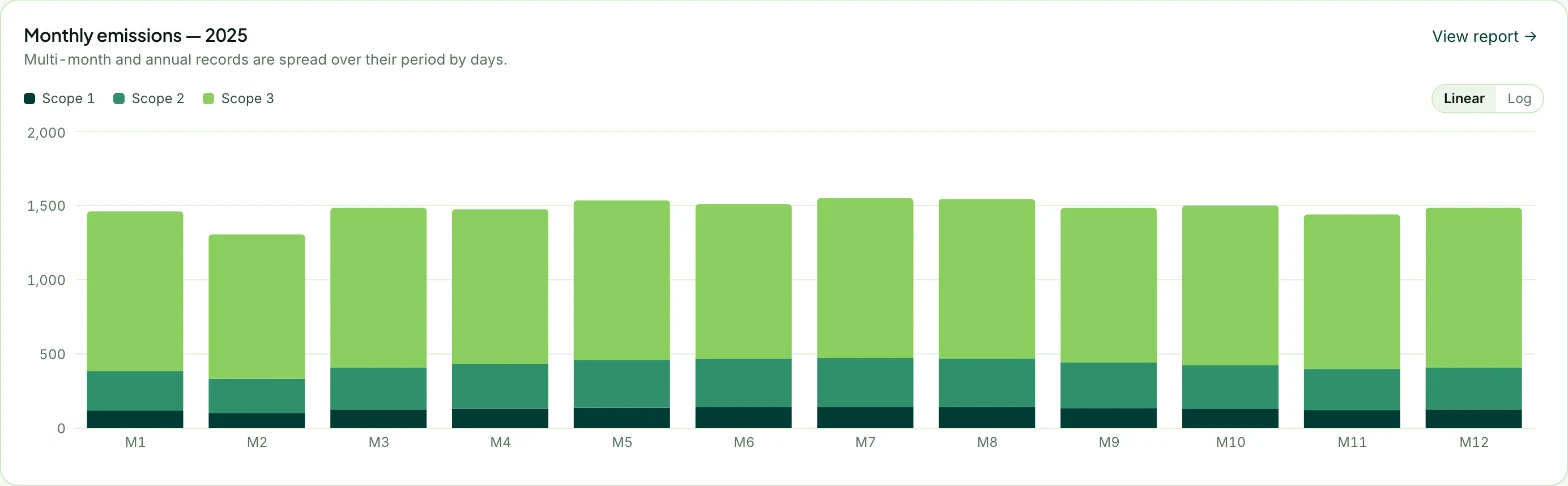
Track monthly against the pathway
- Monthly data in the inventory shows at once whether you are on or off track.
- Export the progress report when due; facilities with allowances compare emissions against them.

"Which source is largest? Set a 30 % target for 2030."
The AI reads emissions by scope, source and site, suggests measures for the largest sources and creates targets in EcoCheck when you have write access.
Reduction features
See all 6 feature groups
Read more: GHG reduction solutions for businesses 2026 · Supplier data, Scope 3
Emission reduction FAQ
Which companies must report on mitigation?
Facilities on the mandatory GHG inventory list (Decision 42/2026/QĐ-TTg) prepare a mitigation plan and, from 2027, file a mitigation results report before 31 March each year under Decree 06/2022 as amended by Decree 119/2025. Thermal power, iron and steel and cement facilities with allowances must also surrender allowances. Other companies set voluntary targets for customers, banks and ESG.
Where should we start?
From the largest source in your inventory: for most Vietnamese plants that is grid power (Scope 2), then boiler and kiln fuels. Energy efficiency usually pays back fastest; rooftop solar and direct power purchase (DPPA) cut Scope 2 the most.
Is the target against the base year or BAU?
Decree 06 mitigation plans usually set the cut against the business-as-usual (BAU) scenario of the target year; customer and SBTi targets are usually against a base year. EcoCheck supports both, per scope.
How much can be borrowed or offset with credits?
Under Article 19 of Decree 06 (amended by Decree 119/2025), a facility may borrow up to 15 % of next year’s allowances and offset up to 30 % of the amount due with carbon credits; allowances are surrendered by 31 December of the following year.
How does AI help with reduction?
Ask ChatGPT or Claude connected to EcoCheck: "which source is largest this year?", "set a 30 % Scope 1–2 target for 2030", "where are we against the base year?". The AI reads the inventory and creates targets and measures within your access.
Need a mitigation plan or a target for customers?
Leave your number. An EcoCheck expert will call to review your inventory data and suggest targets and measures that fit.