1. GHG inventory: A global trend and an urgent requirement in Vietnam
2. The current state of GHG inventory software solutions today
3. The future of GHG inventory software: 5 key trends in the next 5 years
4. What do businesses need to do to stay ahead of the trend?
5. EcoCheck - The pioneering GHG inventory software solution for Vietnamese businesses
Conclusion
The Future of GHG Inventory Software: What Changes in 5 Years?
As the world enters the race to reduce emissions and achieve carbon neutrality, GHG inventory software is becoming an indispensable tool for businesses. However, the rapid development of international standards, together with breakthroughs in digital technologies such as artificial intelligence (AI), (IoT), and blockchain, is fundamentally changing the way businesses approach greenhouse gas inventory and emissions management. This article provides a detailed analysis of the major trends that will shape the future of GHG inventory software over the next 5 years, while also explaining their impact on corporate sustainable development strategies.
1. GHG inventory: A global trend and an urgent requirement in Vietnam
A GHG inventory (Greenhouse Gas Inventory) is no longer optional but has become a mandatory requirement in many countries, especially for businesses in high-emission sectors. In Vietnam, Decree 06/2022/ND-CP (as amended by Decree 119/2025/ND-CP, effective August 1, 2025) sets out the responsibility to inventory and report greenhouse gas emissions for facilities on the list issued by the Prime Minister. The current list, Decision 42/2026/QD-TTg (effective September 25, 2026), covers 2,441 facilities, and the next facility-level inventory report must be submitted to the provincial People's Committee before March 31, 2027. This is not only a legal requirement but also a prerequisite for businesses to participate in global supply chains and meet the increasingly stringent ESG (environmental, social, and governance) criteria of international partners and investors.
According to the IPCC Special Report on Global Warming of 1.5°C (2018), keeping warming to 1.5°C requires global net CO2 emissions to fall by about 45% from 2010 levels by 2030. To track progress toward that, businesses need periodic and transparent emissions inventories. This is driving the strong development of GHG inventory software solutions to help businesses collect and report data accurately and transparently, meeting international standards.
2. The current state of GHG inventory software solutions today
At present, many businesses in Vietnam still conduct GHG inventories using manual or semi-automated methods, relying mainly on internal data and reports from production departments. Several international software platforms such as Sphera, Enablon, and EcoReal all provide GHG inventory platforms in accordance with ISO 14064 and the GHG Protocol. However, these solutions are costly and require deep expertise to operate effectively. Meanwhile, domestic GHG inventory software is still quite new, with a limited number of providers, features that do not yet fully meet international standards, and a lack of capability to integrate with the company's digital ecosystem.
In addition, real-time emissions data management has hardly been widely deployed. Most of the data collection and emissions calculation processes remain manual, which can easily lead to data discrepancies and affect the transparency of reports. This is precisely the major barrier that makes it difficult for businesses to access opportunities to participate in the carbon credit market or to be highly rated on ESG standards.
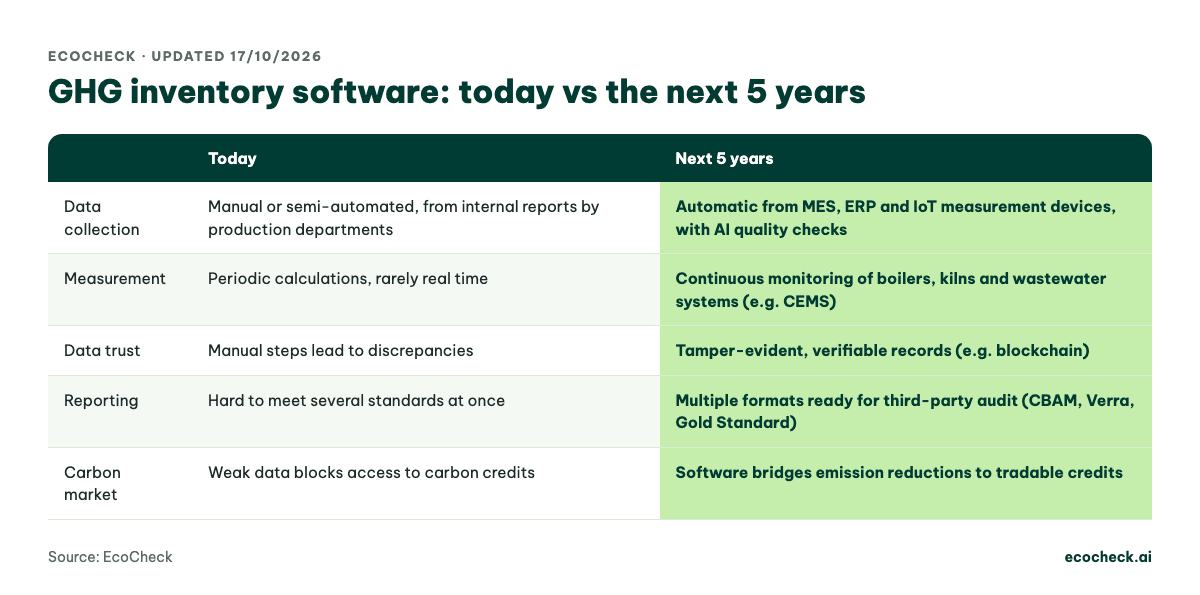
How GHG inventory software is expected to change over the next 5 years
3. The future of GHG inventory software: 5 key trends in the next 5 years
3.1. Artificial intelligence (AI) automating the entire inventory process
The emergence of artificial intelligence and machine learning will be a key factor helping businesses optimize the GHG inventory process. AI enables the automatic collection, analysis, and processing of large volumes of emissions data from production management systems (MES, ERP) and IoT measurement devices.
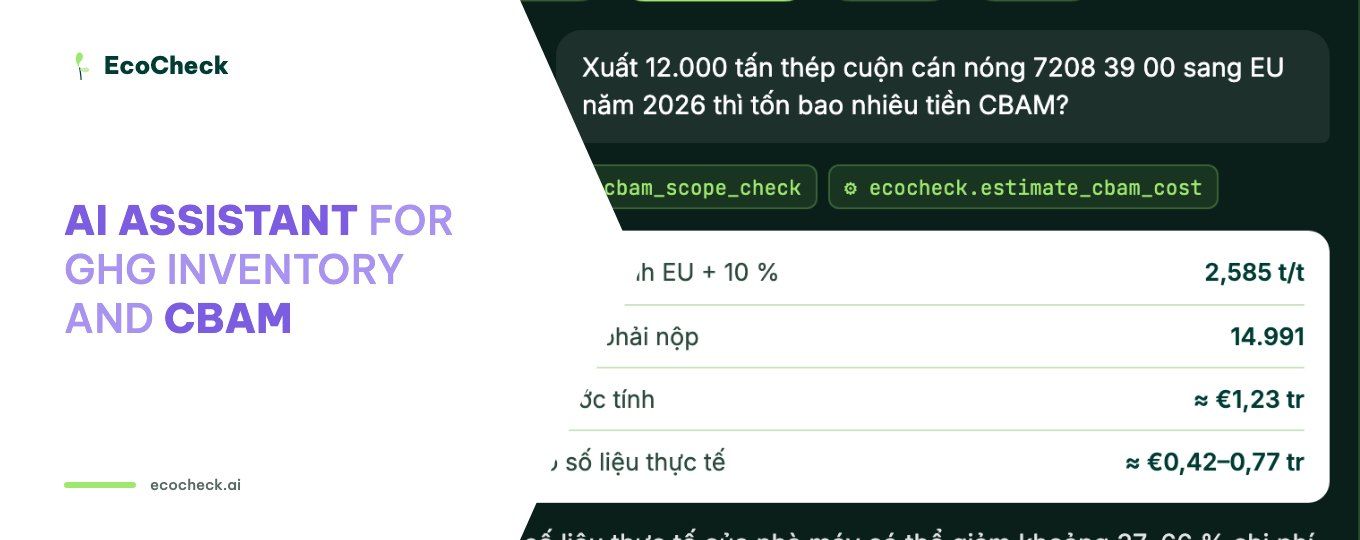
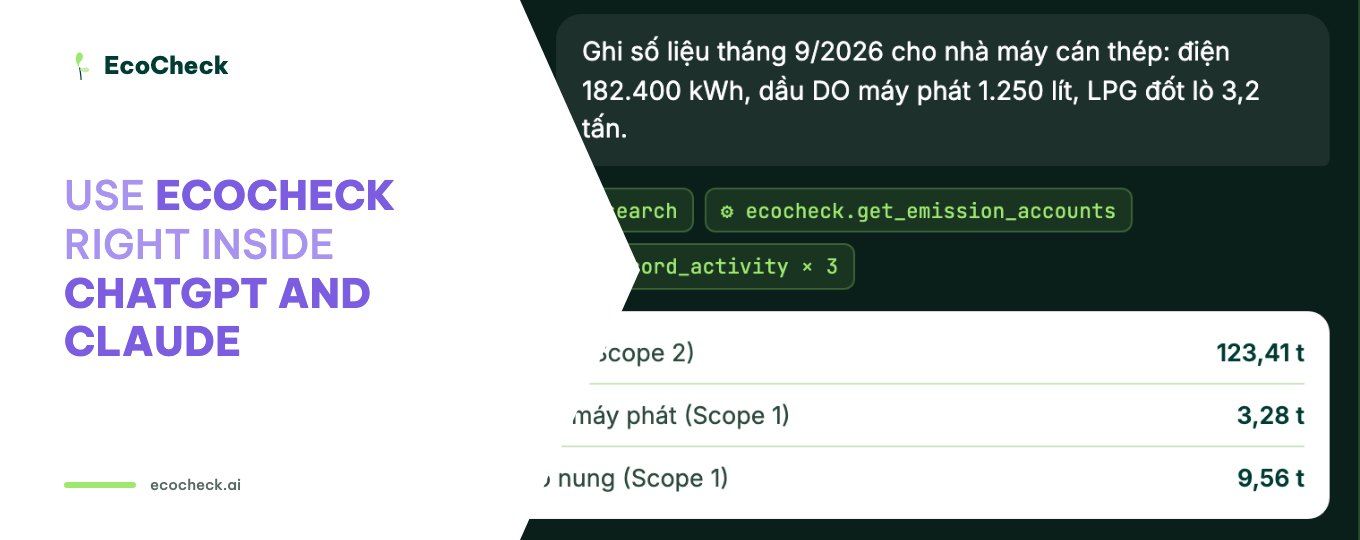
For example, the EcoCheck.ai platform uses AI to assist with data entry and input data quality control, helping to shorten the time needed to compile inventory data. Machine learning algorithms can detect anomalies in emissions data, thereby alerting businesses to emission hotspots that need priority control.
3.2. Integration of IoT sensor systems and direct emissions measurement
In the near future, GHG inventory software will integrate directly with IoT sensor systems and real-time emissions measurement devices. This not only increases accuracy but also helps businesses continuously monitor major emission sources such as boilers, kilns, and wastewater treatment systems.
A typical example is Continuous Emissions Monitoring Systems (CEMS), which are widely used at cement and thermal power plants; CEMS data can be transmitted directly to an emissions management system and connected to GHG inventory software.

3.3. Blockchain enhancing transparency and security for emissions data
Blockchain is becoming a foundational technology that helps authenticate and secure GHG inventory data. Thanks to its decentralized and immutable nature, blockchain helps stakeholders trust the accuracy and transparency of emissions data.
Blockchain is already part of carbon market data infrastructure. For example, the Climate Action Data Trust (CAD Trust), launched in late 2022 by the World Bank, the International Emissions Trading Association (IETA) and the Government of Singapore, uses blockchain to aggregate data from multiple carbon credit registries and reduce double counting (Source: World Bank, IETA).
3.4. Meeting stricter international standards and legal regulations
ISO 14068-1:2023 on carbon neutrality was published by ISO in November 2023 and is being adopted by a growing number of organizations. In parallel, the European Union's Carbon Border Adjustment Mechanism (CBAM) entered its definitive phase on January 1, 2026, leading EU importers to require businesses exporting to the EU to provide detailed, independently verified emissions reports.
For Vietnamese businesses, complying with Decree 06/2022/ND-CP (as amended by Decree 119/2025/ND-CP) will be a stepping stone to meeting stricter international requirements. GHG inventory software over the next 5 years will need to integrate the capability to provide reports in multiple formats and meet the audit processes of third parties such as Verra, Gold Standard, or other independent assessment organizations.
3.5. Connecting to carbon credit exchanges and Net Zero platforms
Vietnam's domestic carbon exchange opened on the Hanoi Stock Exchange (HNX) platform on June 29, 2026 under Decree 29/2026/ND-CP, with the VN2025 emission allowance as its first product; as of October 14, 2026, no carbon credit had been listed (see Vietnam's carbon market in 2026). As the market expands, businesses will need to manage their emissions more transparently and accurately than ever before. GHG inventory software will become the bridge that helps businesses calculate the amount of emissions reduced, while converting them into carbon credits with commercial value on the market.
Advanced inventory platforms will also support businesses in building and monitoring their Net Zero roadmap, based on scientific indicators and emission reduction benchmarks as recommended by the IPCC (Intergovernmental Panel on Climate Change).
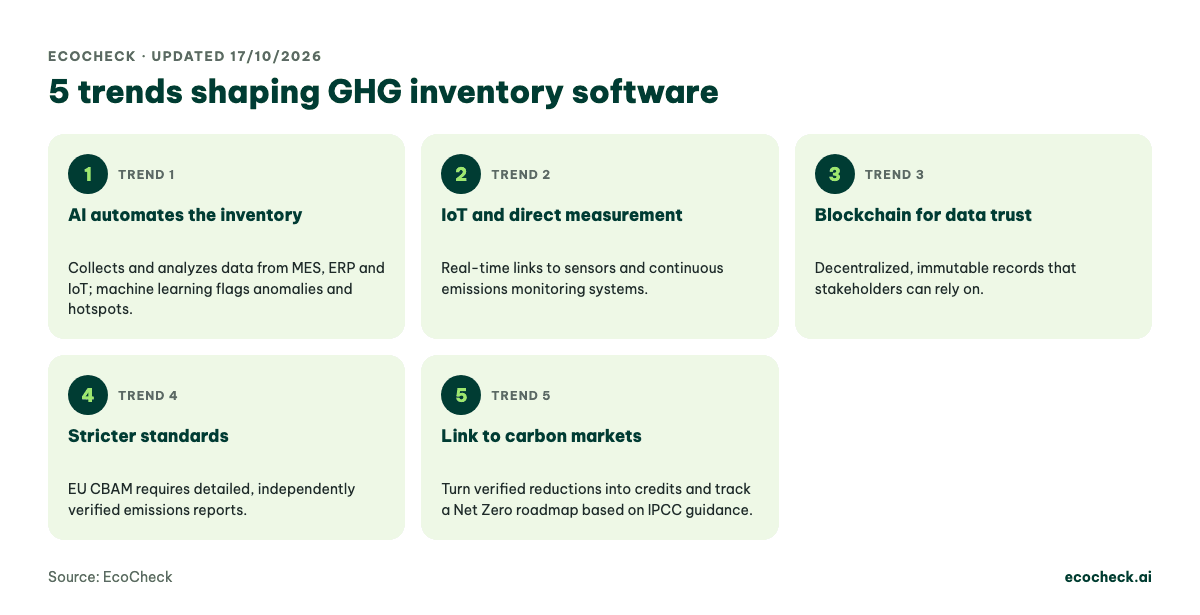
Five technology and regulatory trends for GHG inventory software
4. What do businesses need to do to stay ahead of the trend?
To adapt to these changes, businesses need to implement a GHG inventory right now, while prioritizing software solutions capable of integrating AI, IoT, and blockchain technologies. Investing in emissions monitoring systems and digitized emissions data management platforms not only helps businesses comply with regulations but also creates the conditions to participate in carbon credit trading opportunities, while enhancing reputation and international competitiveness.
In particular, it is necessary to build an environmental management team with deep knowledge of emissions inventory and international standards, in order to operate the software system effectively and optimize the emission reduction process in production operations.
5. EcoCheck - The pioneering GHG inventory software solution for Vietnamese businesses
EcoCheck is an advanced GHG inventory platform developed by BeevR Technologies, providing an automated inventory solution that complies with international standards and Vietnamese legal regulations. The software helps businesses automate the inventory process, enhance transparency, and support effective Net Zero planning.
EcoCheck helps businesses collect activity data, calculate emissions and prepare facility-level inventory reports under Decree 06/2022/ND-CP (as amended by Decree 119/2025/ND-CP). Standardized inventory data is also the foundation for tracking allowance positions and preparing to participate in the domestic carbon exchange, which opened on HNX on June 29, 2026.
Conclusion
Over the next 5 years, the strong transformation of GHG inventory software, driven by the application of digital technology and compliance with global standards, will create a turning point for businesses on their journey to Net Zero. Businesses that proactively invest in modern inventory software will not only ensure legal compliance but also increase their opportunities for sustainable business on the international market.
Don't wait until regulations become a barrier. Contact EcoCheck now to be ready for a GHG inventory and emissions reduction roadmap that is easy, accurate, and effective.
Is your business required to report GHG emissions?
EcoCheck automatically calculates Scope 1/2/3 and exports NĐ06/TT38-compliant reports in one click — saving 90% of the time vs. Excel.
Latest posts